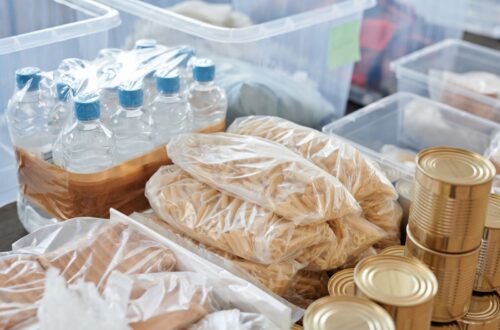

Produce is one of the easiest nutrition gaps to fill in a food storage setup, and one of the most neglected. If your emergency stash is heavy on rice, beans and canned meat, the Harmony House Dehydrated Vegetable Sampler is the kind of thing that keeps meals from feeling like punishment after day three. It is a 15-pouch variety pack of dried vegetables that soaks or simmers back to life in minutes, and it replaces the Ready Hour fruit and veggie mix this review used to cover, which is no longer sold.
What It Does
The sampler is fifteen resealable zip pouches, one vegetable each: broccoli, cabbage, carrots, celery, corn, green beans, jalapenos, leeks, onions, peas, bell peppers, potatoes, spinach and tomatoes, plus a mixed pouch depending on the current assortment. Harmony House rates the set at about 40 cups of rehydrated vegetables, roughly ten quarts, from a box that weighs under three pounds. Preparation is simple: soak or simmer for 10 to 15 minutes, then cook as you would fresh. The vegetables are non-GMO, gluten free and kosher.
The important word here is dehydrated, not freeze-dried. Dehydration removes most of the water with low heat; freeze-drying removes nearly all of it under vacuum. The practical differences: dehydrated vegetables are denser and cheaper per serving, they rehydrate a little more slowly and come back slightly chewier, and their shelf life is measured in years rather than decades. Harmony House says the pouches keep for years in a cool cupboard. That is a long time, but it is not the 25-year claim you see on freeze-dried buckets, and you should plan rotation accordingly.
Why It Belongs in Your Kit
Most preppers underestimate how fast they will tire of calorie-dense but monotonous food. After a hurricane knocks power out for five or six days, which is not hypothetical on the Gulf Coast, you are eating what you stored. A handful of dried onions, peppers and tomatoes turns a pot of rice and beans into a meal, and a pouch of peas or corn stirred into a freeze-dried entree makes it taste like food instead of an obligation. Morale matters more than people admit by day four.
The pouch format earns its place in a grab-and-go bag too. If you are loading the truck for a mandatory evacuation and taking a few days of food to a shelter or a relative’s house, a few pouches add real nutritional variety for almost no space or weight. With a small stove and some instant oatmeal, you have a few reasonably balanced meals that do not depend on whatever the shelter is serving.
It also pulls weight outside storm season. Dried vegetables are a legitimate camping and backpacking staple, and because each pouch reseals, you can use a little at a time and rotate the box through normal cooking so nothing ever expires on the shelf. A tablespoon of dried onion and pepper in a weeknight pot of chili is the easiest rotation plan there is, and it means you already know how each vegetable cooks before you need to rely on it.
Honest Limitations
This is vegetables only. The product it replaces mixed in fruit; this one does not. If you want dried fruit in storage, add it separately, and be aware that most shelf-stable fruit is either sugared or freeze-dried at a higher price.
Rehydration takes time and water. In a situation where water is already scarce, soaking food is a real trade-off. The vegetables are edible dry in a pinch, but the texture is leathery and they are far better after 10 to 15 minutes in water. Budget roughly a cup of water per cup of finished vegetables, more for potatoes and beans.
Zip pouches are convenient but not bombproof. They are not #10 cans, and they will not survive a hot Florida garage summer after summer. Store the box in a closet or pantry, away from heat and light, and treat it as a two- to five-year rotation item rather than a forget-it-for-decades purchase. Freeze-dried buckets handle the long-haul job; this handles the everyday one.
How It Stacks Up
The obvious alternative is freeze-dried vegetables in #10 cans from Augason Farms or Mountain House. Those offer much longer shelf life and better texture after rehydration, at a higher price per serving and with less variety per can. If you are building a deep, long-term pantry, cans of the three or four vegetables your family actually eats are the better investment. The Harmony House sampler is the easier starting point: fourteen vegetables in one box, no commitment to a case of anything, and a way to learn what your household will eat before you buy in bulk.
Against complete meal buckets such as the ReadyWise entree bucket or the Augason Farms 30-day kit, this is not a competitor but a complement: the buckets provide the calories, the sampler provides the vegetables those entrees are short on. Our emergency food roundup lays out how the pieces fit together.
Who Should Buy This
This is a good fit for someone building a starter emergency food supply who wants vegetable variety without a research project, and for anyone whose storage is all grains and protein and knows it. It is also a sensible buy for car campers and backpackers who want lightweight produce without planning individual ingredients.
It is the wrong tool for a decades-deep pantry where maximum shelf life and cost per serving are the goals; buy #10 cans for that. And if you specifically want fruit, look elsewhere; this box is savory.
Common Questions
How long does it last?
Harmony House says the pouches store for years in a cool cupboard. Expect the best quality within two to three years and rotate the box through regular cooking. Once a pouch is open, the zip closure keeps it usable for weeks, but it is not an airtight can.
Can you eat it without adding water?
You can, but it is unpleasant and hard on the digestion. Soaking or simmering for 10 to 15 minutes is the difference between a snack you tolerate and a vegetable you would serve.
How much water does it need?
Roughly equal parts water to finished vegetables by volume, a bit more for potatoes and beans. If you are rationing water, cook the vegetables into soups and stews so the soaking water becomes part of the meal rather than something you pour off.
Is this enough produce for real nutrition in an emergency?
It is a supplement, not a standalone solution. Forty cups of vegetables goes a long way toward fiber, vitamins and variety across a two-week outage for a small household, but it needs to sit alongside calories from grains, protein and fat. Think of it as one piece of a larger plan, not the whole thing.
Bottom Line
The Harmony House Dehydrated Vegetable Sampler is a straightforward, low-commitment way to add real vegetables to a food storage setup that is short on them. It will not match freeze-dried cans for shelf life, and it will not replace a stocked pantry, but for what it is, it does the job without complications.
Some links on this page are Amazon affiliate links. If you buy through them, Ultimate Prepper’s Guide may earn a small commission at no extra cost to you.