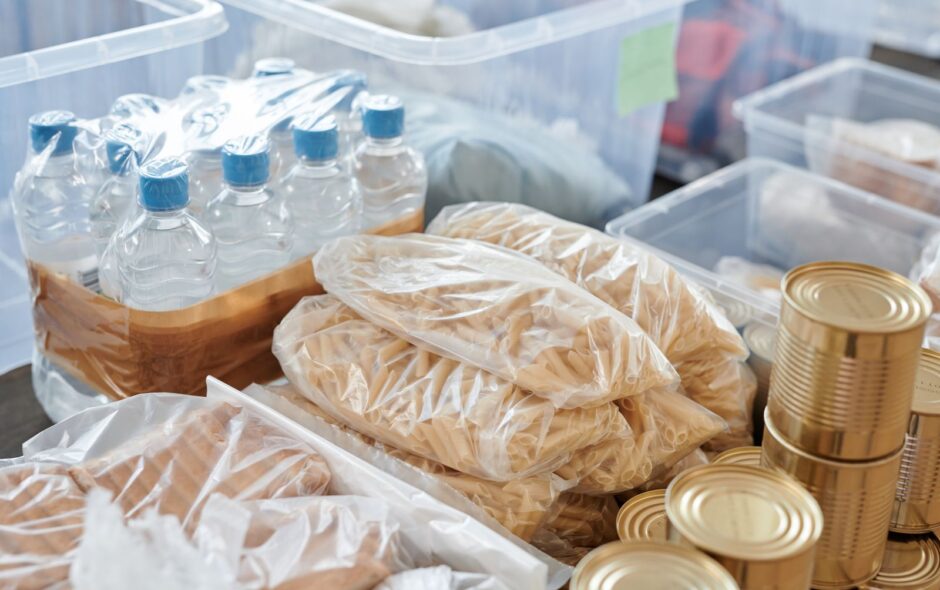
The food problem after a hurricane is rarely the first two days. Most households can eat through the pantry and the thawing freezer for that long. The problem is day four through day ten, when the stores are still closed, the roads are still blocked, and the camp stove has become the kitchen. That is the window a sealed bucket of freeze-dried meals is meant to cover, and it is why the sealed bucket, not the ration bar, is the center of a Gulf Coast food plan.
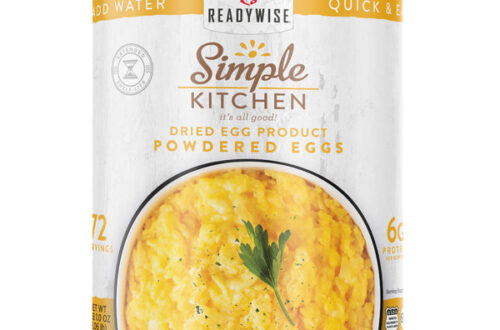
The ReadyWise 132-Serving Emergency Food Supply bucket is the larger of the two ReadyWise buckets sold through Amazon, a single pail of freeze-dried and dehydrated entrees and breakfasts in sealed Mylar pouches that ReadyWise rates for a shelf life of up to 25 years. This review covers what the serving count actually buys you, how it fits with the two-week supply plan, and the one thing you should know before you buy: ReadyWise does not publish a product page for this particular bucket, so some figures below come from the brand’s general specifications rather than from a label for this exact pail.
Who It Is For
This bucket is for the household that has decided to keep real meals, not just bars, for a multi-day outage, and wants to buy them once. A couple riding out a storm at home, a family of four that wants a week of hot dinners on top of the pantry, or anyone who stocks a vacation property that sits empty most of the year fits the profile. It is a shelter-in-place item: it needs water, a pot and a heat source, and it weighs enough that it is not an evacuation bag. For the bag, see the ReadyWise 7-Day Grab Bag.
It is not for someone who wants to count on a fixed number of days from the label. As the specs show, the serving count is published but the calorie total for this bucket is not, and without it the honest day count depends on how your household eats. Treat it as a supplement to the pantry, canned goods and bars, which is how our food supply guide builds the two weeks.
Key Specs
| Specification | ReadyWise 132-Serving Emergency Food Supply |
|---|---|
| Servings | 132 (Amazon listing title) |
| Calories per serving | Not published for this bucket |
| Total calories | Not published for this bucket |
| Days of food at 2,000 calories a day | Not published; cannot be computed without the calorie total |
| Pouch count | Not published for this bucket (ReadyWise packs its buckets in 6-serving pouches) |
| Packaging | Sealed Mylar pouches in a plastic bucket (ReadyWise standard) |
| Shelf life | Up to 25 years, “depending on storage conditions and product type” (ReadyWise FAQ) |
| Storage condition the claim assumes | Cool, dry place, 50 to 70 F, away from sunlight and humidity (ReadyWise FAQ) |
| Water to prepare | Not published for this bucket; ReadyWise states about 1 cup of water per serving on average for its grab bag |
| Preparation | Add boiling water to the pouch contents and wait; pouches are multi-serving, not single-meal |
| Weight | Not published |
Two of those rows deserve a plain reading. ReadyWise’s usual 6-serving pouch, if this bucket follows it, is a pot of food for a family dinner rather than an individual meal; a couple should prepare only what they will eat at one sitting, because prepared food cannot be kept without refrigeration. And “about 1 cup of water per serving” is the brand’s own average, which puts the water cost of this bucket in the neighborhood of 8 gallons if every serving is prepared, on top of drinking water. Our water storage guide explains why cooking water has to be stored separately from the drinking allowance.
What We Like
The format is right for a storm. Mylar pouches with oxygen absorbers inside a lidded bucket are the standard for a reason: the pouch is the barrier, the bucket is the second barrier against humidity and pests, and a failed pouch spoils one dinner rather than the supply. ReadyWise’s 25-year rating is backed by a taste guarantee in the same wording as the shelf-life claim, which is the same approach Mountain House takes with its 30-year promise; our freeze-dried shelf life guide lays out the conditions every brand attaches to the number.
The serving count is large enough to matter. A 132-serving pail is roughly double the 60-serving entree bucket and larger than the 120-serving bucket we reviewed earlier, so for a household that wants one purchase to cover the hot-meal side of a week-plus outage, this is the size to look at. Preparation is the same simple routine across the line: boil water, pour, wait, eat from the pouch or a pot; prepare only what will be eaten, since leftovers would need refrigeration.
ReadyWise’s storage guidance is specific and achievable. A 50 to 70 F closet inside the air-conditioned house is where this bucket belongs, and because it is one sealed pail it is easy to keep there, check once a year and forget the rest of the time.
Limitations
The biggest limitation is the missing label data. ReadyWise publishes calorie totals for its site-sold buckets, but this 132-serving configuration appears to be a retail-channel item with no page of its own, and the brand’s site does not state its calories per serving, total calories, pouch count, meal list or weight. A “serving” of emergency food is a label unit, often a few hundred calories, so 132 servings is not 132 meals and is not a fixed number of days. Until you have the pail and can read its nutrition panel, plan it as a supplement rather than the whole supply, and do the day math yourself from the printed total divided by 2,000.
It needs a lot of water and a working heat source. At the brand’s average of a cup per serving, every pouch is a quart or more of boiling water, which has to come from stored water and a stove such as the Coleman Triton or a similar outdoor burner. Without both, the bucket is inert.
It is a bucket, not a bag. The pouches are multi-serving, the pail is not something you carry far, and the shelf life assumes it sits in a cool closet rather than a vehicle. The 25-year claim also carries the brand’s own qualifier, “depending on storage conditions and product type”; drink mixes, dairy and egg components in ReadyWise buckets are not rated the same as the freeze-dried entrees, and a bucket kept in a hot garage should be rotated far sooner than the lid suggests.
Finally, sodium and variety are the usual freeze-dried trade-offs. Emergency entrees are built for shelf life and calories, and anyone on a restricted diet should read the ingredient panel on the pouches rather than rely on a review.
Alternatives
The ReadyWise 60-Serving Entree Bucket is the smaller sibling with a published calorie total, which makes it easier to plan around; two of them cover a couple for a week with room to spare. The Augason Farms 30-Day Emergency Food Supply is the other mainstream pail, with the brand’s 55 to 70 F storage guidance and a one-year rule for opened cans. For the full field, including the Mountain House bucket that no longer has a featured Amazon offer, see our emergency food storage roundup.
Common Questions
How many days of food is 132 servings?
It depends on the calorie total printed on the bucket, which ReadyWise does not publish online for this configuration. The method is simple once you have the pail: divide the total calories on the label by 2,000 for an adult’s full-ration day count, or by the lower figure the brand itself uses for its 2-week bucket (1,800 a day). Our two-week supply guide walks through the arithmetic with ReadyWise’s published 60-serving and 120-serving totals as examples.
How much water does it take?
ReadyWise says its meals need about 1 cup of water per serving on average, so a fully prepared 132-serving bucket is in the range of 8 gallons of cooking water. The CDC’s gallon per person per day already includes cooking and hygiene as well as drinking, so work out this bucket’s actual preparation water and add it where the plan runs tight. Store it as a distinct line item, and plan a heat source that can boil a quart at a time for the length of the outage.
Does it really last 25 years?
ReadyWise rates its products at up to 25 years and backs the figure with a taste guarantee, on the condition that the bucket stays sealed in a cool, dry place at 50 to 70 F out of sunlight and humidity. That is a closet inside the house, not a garage or shed. Stored hot, the food does not become unsafe on a date, but the brand’s own qualifier applies and quality falls off sooner. The pouches carry a printed best-by date; write the earliest one on the lid when the bucket arrives.
Bottom Line
The ReadyWise 132-Serving bucket is the right shape for a Gulf Coast shelter-in-place plan: sealed pouches, a 25-year rating with clear storage conditions, and enough servings to carry the hot-meal side of a week-plus outage for a small household. Buy it knowing that the brand does not publish its calorie total, so the day count is yours to work out from the label, and pair it with stored water and a stove or it does nothing.
If it’s out of stock: the My Food Storage Breakfast Bucket is the nearest in-stock bucket (120 servings), but it is breakfast pouches only, so pair it with entrees.
Updated 2026-11-11: the ReadyWise 132-serving bucket was out of stock on Amazon, so we added an in-stock alternative.
Some links on this page are Amazon affiliate links. If you buy through them, Ultimate Prepper’s Guide may earn a small commission at no extra cost to you.