When a hurricane takes the power out, it usually takes the water with it. Municipal pumps and treatment plants need electricity, well pumps need electricity, and even where the taps keep flowing a boil-water notice often follows within a day because pressure dropped somewhere in the system. The result is the same in a coastal city or a rural county: for several days, the only safe water in your house is the water you put there before the storm.
This guide answers the question people ask us most often in June and ignore until September: how much water do you actually need, per person, per day, and for the pets, and what is the cheapest way to store, treat and filter it? The figures come from FEMA, Ready.gov and the CDC, adjusted upward where Gulf Coast heat changes the math.
The Baseline: One Gallon Per Person Per Day
Ready.gov’s standing recommendation is at least one gallon of water per person per day, for drinking and sanitation, stored for several days at a minimum; a three-day supply is the evacuation floor, and two weeks is the sheltering-at-home target FEMA has long encouraged. Ready.gov puts a normally active person’s fluid needs at about three quarters of a gallon a day, which leaves the rest of the gallon for food preparation and basic hygiene. That is the floor, not the target.
Three things push the number up, and all three apply on the Gulf Coast in hurricane season:
- Heat. A house with no air conditioning in August is hot around the clock. People drink more, sweat more, and need more water to stay safe. Plan on at least a gallon and a half per adult per day in those conditions, and more for anyone doing cleanup outdoors.
- Who is in the house. Ready.gov singles out children, nursing mothers and people who are sick as needing more than the baseline. Someone recovering from illness or managing a chronic condition should be budgeted at the high end.
- Sanitation. Flushing a toilet by pouring water into the bowl takes more than a gallon per flush. Handwashing, dishwashing and keeping wounds clean add up fast. Non-potable water (rain barrels, the pool, the bathtub) can cover most of this if you plan for it separately from drinking water.
A worked example: a household of two adults, two children and a large dog, sheltering in place for a conservative seven days in the heat. Two adults at a gallon and a half, two children at a gallon, and a dog that will drink close to a gallon a day in the heat comes to six gallons a day, or 42 gallons for the week. Add a separate non-potable supply for flushing and washing, and you can see why the bathtub matters.
Pets
Pets are missed in almost every water plan. A medium or large dog drinks roughly an ounce of water per pound of body weight per day in normal conditions and considerably more in heat or after exertion. A cat needs far less but still needs clean water daily. Add pet water to your household total rather than assuming it comes out of the human margin, and store it the same way. Pets are also the reason to keep a few shallow bowls and a collapsible travel bowl in the evacuation kit.
Store: Where the Gallons Come From
Stored water comes in three tiers, and a complete plan uses all three.
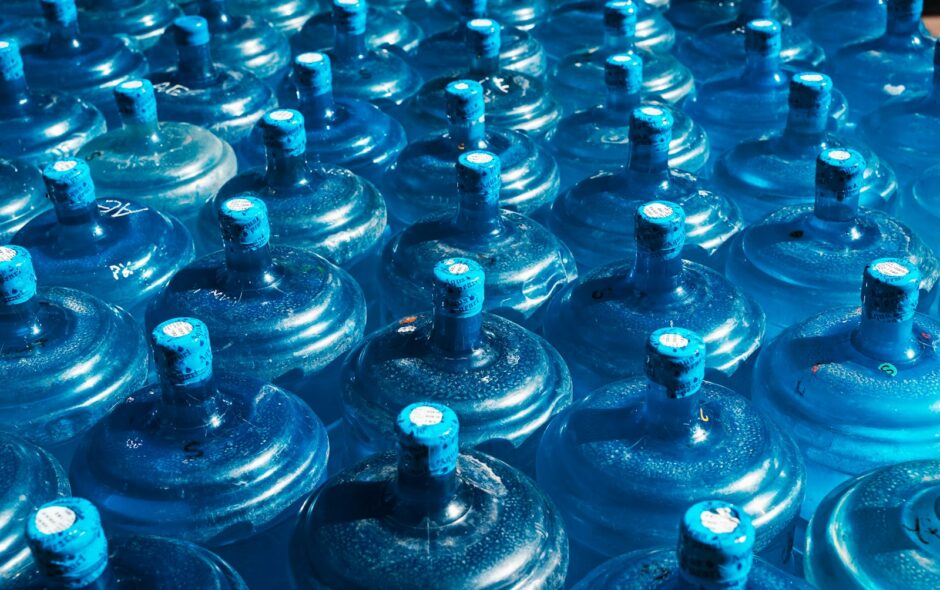
Tier 1: commercially bottled water. Sealed, shelf-stable, portable and the easiest thing to grab if you evacuate. It is also bulky, and it disappears from store shelves days before landfall. Buy it in the off-season and rotate it through normal use. Keep it out of direct sun and off a hot garage floor, and note the date on the case.
Tier 2: containers you fill yourself. Food-grade water containers, filled from the tap before the storm, are the cheapest way to hold a week’s drinking supply. Clean them, fill them, cap them, and store them in a cool dark place. Ready.gov’s guidance is to replace water that was not commercially bottled every six months, so fill them when the season starts rather than leaving water in them year-round. If you are treating stored water yourself, the EPA’s table for unscented household bleach is eight drops of 6 percent bleach per gallon, or six drops of 8.25 percent bleach (two drops per quart either way; Ready.gov rounds this to an eighth of a teaspoon per gallon), stirred and left to stand for at least 30 minutes before use. If the water is cloudy, colored or very cold, let it settle, pour it through a clean cloth or coffee filter, and double the dose. Only do this with water you are unsure of; municipal tap water collected before an outage is already treated.
Tier 3: the bathtub and bulk containers. This is where the big numbers come from. A bathtub bladder like the WaterBOB turns a standard tub into roughly 100 gallons of sealed drinking water in about 20 minutes, which solves a family’s drinking supply for two weeks in one step. Even without a bladder, a filled tub is a reliable non-potable reserve for flushing and washing. Fill it when the warning is issued, before pressure drops.
Rain barrels, the pool and the water heater tank are additional non-potable sources after the storm. Pool water is fine for flushing but should not be treated as drinking water because of the chemicals. The water heater holds 40 to 80 gallons of clean water you can drain from the valve at the bottom if the supply was clean when it went in; turn the heater off first.
For container choices and rotation, see our roundup of the best emergency water storage containers and our guide to storing water long term.
Treat: Tablets and Boiling
When the stored supply runs short or you are unsure of a source, treatment makes biologically questionable water safe to drink. Boiling is the gold standard: the CDC says a rolling boil for one minute (three minutes at elevations above 6,500 feet) kills the bacteria, viruses and protozoa that cause illness; if the water is cloudy, let it settle and pour it through a clean cloth or coffee filter first. It costs fuel, and a camp stove with a few propane cylinders is the usual way to do it when the range is dead.
Chemical treatment is the lightweight backup. Iodine or chlorine dioxide tablets like the Potable Aqua tablets we reviewed treat a quart at a time with a 30-minute wait (longer in cold water), they weigh nothing, and they belong in every evacuation bag. Follow the package timing exactly. Two limits matter: the CDC notes that iodine tablets (the standard Potable Aqua is iodine) and plain chlorine tablets do not kill Cryptosporidium, while chlorine dioxide tablets do when used as directed, and boiling kills all of them; and the CDC advises against drinking iodine-treated water for more than a few weeks at a time. Tablets also do nothing about chemicals, fuel or sediment. Treat the clearest water you can find, or let cloudy water settle and pour off the top first.
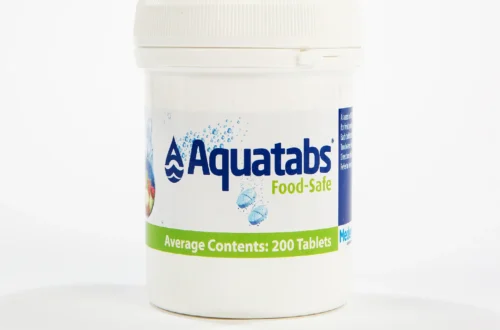
Our roundup of the best water purification tablets compares the common options, and our Aquatabs review covers one of them in depth.
Filter: What a Filter Does and Does Not Remove
Filters are the convenient middle ground, and the one most often misunderstood. A hollow-fiber filter rated to 0.1 micron, like the Sawyer Squeeze or its smaller sibling the Sawyer Mini, removes bacteria and protozoa, which covers the vast majority of waterborne illness in the United States. It does not remove viruses, which are smaller than the pores, and it does not remove chemicals, fuel, pesticides or dissolved metals. After a hurricane, floodwater can carry all of those, which is why a standard filter alone is not the right tool for floodwater.
Two kinds of products close that gap. A purifier bottle like the Grayl GeoPress is rated to remove viruses as well, plus many chemicals and heavy metals, in a single press. A gravity system like the Big Berkey handles household volumes on the counter with no pumping, which is what you want when you are producing water for four people for a week rather than filling one bottle on a trail. A hand pump such as the Survivor Filter PRO sits between the two. Our water filter roundup compares them side by side.
Whatever you choose, the combination that works for a hurricane is: stored tap water for the first days, a gravity or purifier system for the household when stored water runs low, a squeeze or mini filter plus tablets in each person’s evacuation bag, and boiling as the fallback for anything you are not sure about.
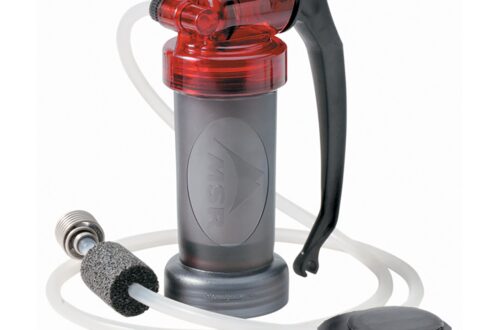
If you want a pump filter with a ceramic element you can clean in the field, see our MSR MiniWorks EX review.
Boil-Water Notices After the Storm
When the taps come back on, assume a boil-water notice is in effect until the utility says otherwise, because pressure loss in the mains lets contaminated groundwater in. During a notice, use bottled or stored water, or tap water boiled for one minute, for drinking, brushing teeth, making ice, preparing food and washing produce. Hand washing with soap and tap water is generally considered fine; the CDC’s advice is to boil or use bottled water for anything that goes in your mouth. Discard any ice the refrigerator made during the notice, and flush and run the taps as the utility instructs once it lifts.
For what to do when the tap water is in question after the storm, read our guide to post-storm water safety.
Calculate Three-, Seven- and Fourteen-Day Water Totals
Work the numbers once in the off-season and write them down.
- Adults: 1.5 gallons per day in heat (1 gallon baseline)
- Children: 1 gallon per day
- Anyone ill, pregnant or nursing: 1.5 gallons per day or more
- Large dog: up to 1 gallon per day; smaller pets scaled down
- Multiply your daily total by 3, 7 and 14 to compare evacuation, short-outage and longer home-storage quantities.
- Add a non-potable reserve (the tub, barrels, the pool) for flushing and washing, roughly 2 to 3 gallons per person per day
Then match the total to storage: cases of bottled water for the evacuation days, filled containers for the first week at home, a bathtub bladder or bulk containers for the rest, and a filter and tablets to extend everything beyond the plan if the outage runs long.
Common Questions
How long does stored tap water stay safe?
Commercially bottled water is safe past its printed date if the seal is intact and it has been kept cool and out of sunlight; the date is about taste, not safety. Tap water you bottle yourself in clean containers should be replaced every six months per Ready.gov. Mark the fill date on the container.
Can I drink the water from my pool or water heater?
The water heater, yes, if the supply was clean when it filled and you drain it from the bottom valve with the power off. The pool, no. Pool chemicals and whatever the storm blew into it make it a flushing and washing reserve, not a drinking source, even with a filter.
Is a filter enough for floodwater?
A standard hollow-fiber filter removes bacteria and protozoa but not viruses or chemicals, and floodwater after a hurricane routinely carries sewage, fuel and agricultural runoff. Do not assume boiling or a portable purifier makes floodwater safe; use a known safe supply and follow official water advisories. Build the plan around stored safe water and verified resupply options.
Bottom Line
A gallon per person per day is the starting point, a gallon and a half in Gulf Coast heat, with two weeks the target for sheltering at home. Store it in three tiers (bottled, filled containers, the bathtub), keep tablets and a filter in every evacuation bag, put a gravity or purifier system on the counter for the long haul, and treat everything from the taps as suspect until the utility lifts the notice. Do the arithmetic once, write it inside the pantry door, and fill the tub when the warning is issued.
For a portable backup to stored water, within the removal limits described above, the Sawyer Mini is the filter we recommend in our review.
Some links on this page are Amazon affiliate links. If you buy through them, Ultimate Prepper’s Guide may earn a small commission at no extra cost to you.