The injuries that kill fastest after a hurricane are not the ones most first aid kits are built for. A chainsaw kickback during cleanup, a fall through a damaged roof onto rebar, or a shard of windborne debris can open the chest or an artery while the roads are blocked and help may be far away. Bleeding is the first of those problems, and our Stop-the-Bleed kit guide covers it. A penetrating chest wound is the second, and it needs a different tool.
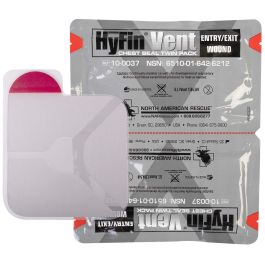
The North American Rescue HyFin Vent Chest Seal Twin Pack is that tool. NAR describes it as an occlusive dressing for the “prevention, management and treatment of an open and/or tension pneumothorax potentially caused by a penetrating chest trauma,” sold as two individually packaged seals so a trained responder can cover both an entry and an exit wound. It is the same seal NAR packs into the Eagle IFAK we reviewed, which is how most preppers first meet it.
Who It Is For
This review is for a narrow reader: someone who has taken, or is about to take, a course that teaches chest seals. The basic Stop the Bleed class from the American College of Surgeons covers direct pressure, wound packing and tourniquets; it does not cover chest trauma. Chest seals belong to the next tier, the Tactical Emergency Casualty Care (TECC) and Tactical Combat Casualty Care (TCCC) curricula that NAR cites on the product page, and to wilderness first responder courses that include penetrating trauma.
If you fit that description and already carry a tourniquet and a pressure bandage, a pair of vented chest seals closes the last obvious gap in a civilian trauma kit. It makes sense in the kit that rides along on cleanup days, in an evacuation vehicle, at a hunting lease, and in a range bag. It also makes sense as a restock item: the seals in a purchased IFAK carry an expiry, and this twin pack replaces them without buying the whole kit again.
If you have no trauma training, this is not the place to start. Start with the first aid kit roundup, book a Stop the Bleed class, and come back to chest seals when a course has shown you where they go and when.
Key Specs
| Specification | North American Rescue HyFin Vent Chest Seal Twin Pack |
|---|---|
| Item number | 10-0037 (NSN 6510-01-642-6212) |
| Contents | Two seals, each individually packaged, each with a gauze pad for wiping the wound surface before application |
| Seal size | 6 in. x 6 in., excluding the pull tab |
| Vents | Three vent channels; NAR says the vent is designed to remain operational if two of the three are obstructed |
| Adhesive | Hydrogel (“advanced hydrogel technology” on NAR’s single-seal page), designed for skin covered in blood, sweat, body hair or dirt |
| Application | Large red pull tab, single-step peel and apply; transparent backing for placement; the seal can be lifted (“burped”) if needed |
| Packaging | Rugged foil twin pouch with Red Tip Technology tear notches, perforated so one seal can be opened and the other stored |
| Packaged size (folded) | 7.5 in. x 4.5 in. x 0.25 in. |
| Weight | 2.5 oz (twin pack) |
| Standards cited | NAR states it meets or exceeds the current EMS Standard of Care and TCCC and TECC guidelines for penetrating chest injuries |
| Shelf life | Not published on NAR’s page; the expiry is printed on the pouch |
| Sterility and latex content | Not published on NAR’s page |
What We Like
The vent design has redundancy built in, as a design claim rather than a guarantee. A vented seal exists to let air and blood escape from the chest cavity on exhalation while stopping air from being drawn in on inhalation. NAR’s three-channel layout is designed so that even with two channels blocked by clotted blood the third still works, the kind of redundancy you want in a product used once, in bad light, by a stressed person.
Two seals, packaged separately. Penetrating trauma often means an exit wound as well as an entry wound. The perforated twin pouch lets you open one seal and keep the second sealed and clean rather than exposing both at once.
The adhesive is designed for real skin, not a mannequin. Gulf Coast cleanup happens in heat, so a casualty will be sweating. NAR describes the hydrogel adhesive as built for blood, sweat, body hair and environmental contaminants, and includes a gauze pad in each package to dry the site first, a small thing many other seals leave out.
It is the seal the professional kits use. NAR supplies military and EMS buyers, the product has a National Stock Number, and it is the chest seal inside the Eagle IFAK. Buying the component the pre-built kits already trust removes one guess from the shopping list.
The packaging opens with gloves on. The red tear notches and large red pull tab are designed for one-handed, gloved opening. Fine-motor skills are the first thing stress takes away.
Limitations
It assumes training, and the training is not the basic class. Knowing what an open chest wound looks like, how to find an exit wound, how to position the casualty, and when a seal should be lifted are course content, not label content. Stop the Bleed, the class most preppers take first, does not cover any of it. A seal applied by someone guessing is not a plan.
Single use, and it expires. Each seal is a one-time dressing, and the hydrogel adhesive has a dated shelf life printed on the pouch. NAR does not publish the shelf life on its product page, so check the printed date when you buy and put the replacement date on your kit calendar. A seal that has lived in a hot truck for five Florida summers is a seal to replace.
It does nothing for bleeding. A chest seal manages air, not hemorrhage. A chest wound that is also bleeding heavily needs the care your training and NAR’s instructions call for, not the wound-packing steps taught for limbs and junctions, and a limb wound needs a tourniquet or a pressure bandage such as the Israeli-style bandage we reviewed. The seal is one item in a kit, never the kit.
It is not a substitute for EMS. Every use of a chest seal is a bridge to a hospital. The point of carrying one is to keep a casualty breathing until an ambulance or a helicopter arrives, not to avoid calling for one. If the phones are down after a storm, the communications plan is as much a part of trauma preparedness as the seal is.
NAR publishes less than you might expect. Shelf life, sterility and latex content are not on the product page. If any of those matters to you, read the pouch or NAR’s product information sheet before relying on it.
Alternatives
North American Rescue Eagle IFAK. If you do not yet own a tourniquet or a trauma dressing, the Eagle IFAK bundles a C-A-T tourniquet, a HyFin Vent twin pack, a trauma dressing, an airway and gloves in a MOLLE pouch. For a first trauma kit it is the simpler purchase; this twin pack is the right buy when you are building your own kit or restocking that one.
Build the kit around the sequence. Our guide to building a Stop-the-Bleed kit lays out the order of priorities: tourniquet and pressure bandage first, hemostatic gauze next, chest seals for the trained user. Read it before deciding whether seals belong in your kit at all.
A general first aid kit. For the far more common injuries of hurricane season the trauma gear is irrelevant and a well-organized general kit is what you will actually open. The first aid kits roundup matches three kits to three scenarios, and our medical preparedness pillar explains how the layers fit together.
Common Questions
Why does a chest seal need a vent?
A penetrating chest wound can let air into the space around the lung. If that air cannot get out, pressure builds and the lung collapses, which is the tension pneumothorax NAR names on the product page. A vented seal is designed to let air and blood escape during exhalation and block air from being drawn in during inhalation. An unvented seal or improvised plastic wrap can trap air instead, which is one reason training matters: the course teaches when a seal should be lifted to release pressure.
Can I use it without training?
You should not count on it. NAR designs the seal for single-step application, and the physical act of peeling and sticking is simple. The judgment around it is not: recognizing the wound, checking for an exit wound, deciding what to do if breathing worsens, and keeping the casualty positioned until help arrives. Those are taught in TECC, TCCC and advanced wilderness courses, not in the 90-minute Stop the Bleed class. Take the class first.
How many should a household keep?
One twin pack per trauma kit is the usual answer, because a single casualty may have an entry and an exit wound. A household with a home kit, a vehicle kit and a range or hunting bag therefore ends up with three twin packs on three different expiry dates. Write the dates down. The seals in a purchased kit such as the Eagle IFAK count toward that total.
Bottom Line
The HyFin Vent Chest Seal Twin Pack is the chest seal the professional kits already carry, with a three-channel vent designed to keep working when two channels clog, a hydrogel adhesive built for sweaty, bloody skin, and packaging that opens one seal at a time. It belongs in the kit of a prepper who has trained past the basic bleeding-control class, as a build-your-own component or as the restock for an aging IFAK, and it does not belong in a kit whose owner has never been shown what a chest wound looks like. Train first, then stock it.
Updated 2026-11-01: replaced an unsourced response-time figure.
Some links on this page are Amazon affiliate links. If you buy through them, Ultimate Prepper’s Guide may earn a small commission at no extra cost to you.