
If you have ever sat in the dark after a hurricane, watching the refrigerator creep toward room temperature while every phone in the house drains, you already understand why a serious power station earns its space in the garage. The Anker SOLIX F3000 is built for exactly that situation: not just keeping devices alive, but running the loads that actually matter in a home for several days at a stretch. It replaces the SOLIX F2000 (PowerHouse 767) we reviewed here before, which has since gone out of stock, and it is a meaningful step up rather than a refresh.
What It Does
The SOLIX F3000 is a 3,072Wh lithium iron phosphate (LFP) battery with a 3,600W continuous AC output and a surge rating of 7,200W for the brief spikes that motors and compressors throw when they start. In plain terms, that is enough capacity to run a full-size refrigerator for the better part of two days on the base unit alone, and enough output to handle appliances most people assume are off limits for a portable station: a window air conditioner, a well pump, a microwave, or a space heater on the rare cold snap.
Anker counts 11 outlets on the unit. Four are standard 120V household outlets rated at 20 amps, which together can push up to 2,400W. The full 3,600W comes out of the 30-amp TT-30R outlet, the same plug RVs use for shore power, and that is the one to use for a transfer cord or a heavy appliance. The rest are USB-C and USB-A ports for phones, tablets, and laptops, a 12V car socket, and an Anderson DC output for 12V gear.
Capacity is expandable. Each BP3000 expansion battery adds another 3,072Wh, and a single F3000 accepts three of them for 12,288Wh. Pair two F3000 units through Anker’s Double Voltage Hub and you get 240V split-phase output at up to 7,200W, with room to grow to roughly 24.5kWh across both stacks. You do not have to buy any of that on day one. The point is that the base unit is a starting block, not a ceiling.
Recharging is where the F3000 separates itself from the last generation. From a 20-amp wall circuit it pulls up to 1,800W and refills in about two hours. Plug a 120V gas generator into its dedicated charging input and it takes 3,600W, which refills the battery in a little over an hour while still running your loads. Two solar inputs accept up to 2,400W of panels combined (one 60V input and one 165V input), and Anker rates a full solar charge at under two hours in strong sun. Combine generator and solar and the input ceiling is 6,000W. The LFP chemistry is rated for 4,000 charge cycles before the pack drops to 80 percent of its original capacity, which is more than a decade of regular use.
Why It Belongs in Your Kit
Here on the Gulf Coast, power outages are not a rare inconvenience. They are a scheduled feature of hurricane season, and the long ones come with heat and humidity that make a dead refrigerator and a silent fan more than an annoyance. The F3000 is sized for that reality. Anker rates it to run a 190W refrigerator for about 42 hours, and its idle draw is low enough that it can sit in standby on AC for around 125 hours without emptying itself, so you are not babysitting it between loads.
The generator pass-through is the feature that changes the math for storm prep. Most households that own a gas generator run it all day because the fridge needs power all day. With the F3000 in the middle, you run the generator for an hour or so to fill the battery, shut it off, and let the station carry the house in silence for the rest of the day and overnight. Less fuel burned, less noise, and far less carbon monoxide risk, because the engine is running a fraction of the time. The unit’s UPS mode keeps essentials powered through the switch when grid power drops.
It also earns its footprint outside of storm season. It will run power tools and lighting at a remote property for a weekend, cover an RV or trailer at a site with no hookup through the TT-30R outlet, and carry a camp kitchen without the fumes of a gas generator. At 91.5 pounds it is a two-person lift into a truck bed, but it rolls on built-in wheels with a telescoping handle, so moving it across a garage or driveway is a one-person job.
Honest Limitations
Ninety-one and a half pounds is not a small number. If you plan to load and unload it solo on a regular basis, factor that in. The wheels and handle help on flat ground and do nothing on stairs.
The household outlets top out at 2,400W combined. If you want the full 3,600W, it has to come through the TT-30R, which means an adapter or a transfer cord for anything that does not already use a 30-amp RV plug. That is a reasonable design choice, but it catches people who expect every outlet to deliver the headline number.
Fast wall charging wants a 20-amp circuit. On a typical 15-amp bedroom or living room circuit you will need to turn the charging rate down in the app, and the two-hour refill becomes closer to three. It is also a premium unit with a premium price tag. If your real needs are a fan, a few phones, and a lamp, you are paying for capacity you will never use, and a station a third this size will serve you better.
Finally, this is a 120V unit on its own. Running a 240V well pump or a central air handler means a second F3000 and the hub, and at that point you are shopping in whole-home backup territory.
How It Stacks Up
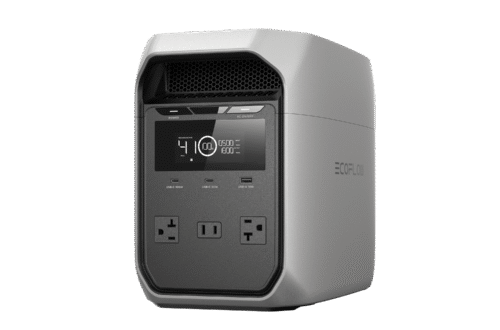
The obvious comparison is the EcoFlow DELTA 3 Ultra, which lands on the same 3,072Wh capacity and 3,600W output with LFP chemistry. The two are close enough that the decision usually comes down to the ecosystem you already own and which one is in stock when you need it. We covered the EcoFlow DELTA 2 as a medium-capacity option, and you can read that review here. The Anker’s advantage is its generator input: 3,600W of pass-through from a standard 120V generator is the fastest path from empty to full that most households actually have access to, and it is the feature that makes the hour-a-day generator routine work.
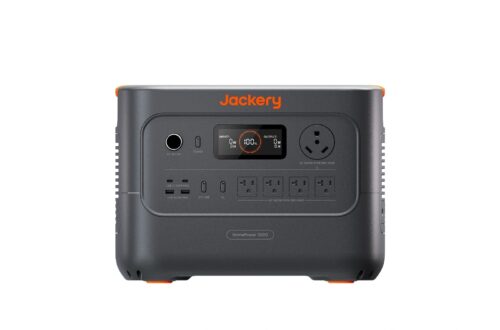
Against the Bluetti Elite 200 V2 and the Jackery Explorer 1000 v2, both of which we have reviewed, the F3000 is simply a different class. Those units are easier to carry and cost far less, and they are the right call for a smaller home or a lighter load list. They will not start a window air conditioner or run a refrigerator for two days without a recharge. If you are deciding where you sit on that spectrum, our solar generator roundup lays the options side by side.
Who Should Buy This
This is the right station if you intend to run real household loads through an extended outage: a working refrigerator, a window unit or large fans, medical equipment such as a CPAP or oxygen concentrator, and device charging for the whole household, all at once and for days. It is also the strongest pick for anyone who already owns a gas generator and wants to stop running it around the clock.
Skip it if your backup needs are light, if weight is a genuine constraint, or if the budget does not stretch to a premium unit. The Jackery Explorer 300 covers small-load scenarios for a fraction of the money, and there is nothing wrong with right-sizing your kit.
Common Questions
Can it actually run a full-size refrigerator?
Yes. A standard refrigerator averages roughly 100 to 200W while running, and Anker’s own rating is about 42 hours for a 190W fridge on the base battery. With a solar panel or a short daily generator run you can stretch that across a typical three to five day outage without the fridge ever warming up.
How long does it take to recharge?
About two hours from a 20-amp wall outlet at the full 1,800W rate, roughly an hour and a quarter from a 120V generator through the 3,600W charging input, and under two hours from 2,400W of solar in strong sun. Smaller solar arrays take proportionally longer; a pair of 200W panels is more of an all-day top-up than a recharge.
Is it safe to run indoors?
Yes. There is no combustion, so no carbon monoxide and no fumes. You can run it in a garage, a hallway, or a bedroom with no ventilation concerns. The LFP chemistry is also more thermally stable than standard lithium-ion, which matters when the unit lives in a Florida garage all summer. Keep the generator you use to recharge it outdoors and well away from windows, exactly as you would without the battery.
Does it support pass-through charging?
Yes, and it is one of the unit’s best features. You can charge from the wall, a generator, or solar while drawing power from the outlets at the same time. The UPS mode means a plugged-in refrigerator or medical device keeps running through a grid failure without you touching anything.
Bottom Line
The Anker SOLIX F3000 is a serious piece of equipment for people with serious power needs. If you want to run the parts of your home that matter through a multi-day outage, not just keep a phone charged, this is the station to build around, and the generator pass-through makes it the one that fits best alongside the gas generator many Gulf Coast households already own.
Some links on this page are Amazon affiliate links. I only recommend gear I personally own – if you buy through my link, I may earn a small commission at no extra cost to you.