
If a storm knocks out your power for a night or two and you just need to keep phones charged, run a CPAP through one sleep cycle, or keep a fan moving air, the Jackery Explorer 300 is worth a serious look. At about 7.5 pounds, it is the kind of unit you grab off the shelf and set on the back seat when a mandatory evacuation order drops. It will not run your refrigerator through a five-day outage, and it was never designed to. For what it is, it is a capable, well-built little unit from the most recognizable name in the category.
A note on the model name, since Jackery’s lineup has shuffled: the Explorer 300 Plus and the 300D that this review previously covered are no longer sold on Amazon. The Explorer 300 is the current small Jackery you can actually buy, and this review now covers that unit. Jackery has sold more than one revision under this listing; confirm the model number before buying. The current listing gives the model number as JE-300E and describes Jackery’s newer LiFePO4 version, and the figures in this review follow Jackery’s own page for that version.
What It Does
The Explorer 300 packs a 292Wh battery behind a 300-watt continuous AC inverter with a 500-watt surge rating. Jackery’s page for the current version lists LiFePO4 cells rated for more than 4,000 cycles before the pack drops to 70 percent of its capacity. Jackery lists charging at 0 to 40 C (32 to 104 F) and discharge at minus 10 to 40 C (14 to 104 F), so a Gulf Coast garage in summer can run past those limits.
Three hundred watts covers small appliances and electronics: a CPAP without its humidifier (typically 30 to 60W), a box fan (40 to 100W), LED lights, phone and laptop chargers, a router, and small medical devices. It will not run a window air conditioner, a microwave or a full-size refrigerator. Do not expect it to.
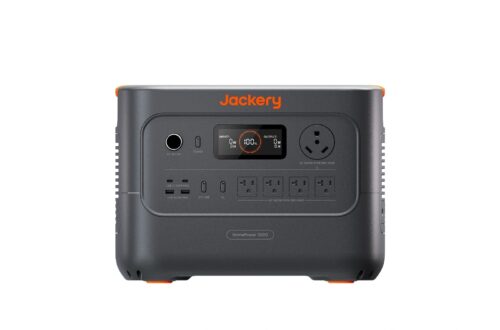
The port layout is generous for the size: two AC outlets, a 100W USB-C Power Delivery port that will charge most laptops at full speed, two USB-A ports, and a 120W car-style 12V outlet. That is six devices at once, and the second AC outlet means you are not reaching for a power strip to run a CPAP and a fan together. It recharges from a wall outlet, from a car’s 12V socket, or from solar. Jackery rates it at 80 percent from a 100W SolarSaga panel in about 2.8 hours of good sun, or 80 percent from a 40W panel in roughly 7.5 hours.
Jackery lists the weight at 7.5 pounds, with a fixed carry handle on top. It is light enough that moving it from room to room or into a vehicle is a one-hand job.
Why It Belongs in Your Hurricane Kit
On the Gulf Coast, power outages after a hurricane are close to guaranteed. Even a glancing blow from a Category 1 can leave neighborhoods dark for 24 to 72 hours. The question is not whether you will lose power; it is whether the small loads that matter most are covered when you do.
Here is where the Explorer 300 earns its spot:
- CPAP users: A standard CPAP without the heated humidifier draws roughly 30 to 60W. At that rate the Explorer 300 covers a full night’s sleep on one charge, with margin. Recharge it from the car the next morning if grid power is still out.
- Phone and device charging: In an evacuation, a live phone is your alerts, your navigation and your link to family. A 292Wh pack recharges a typical smartphone well over a dozen times.
- Fan power in a hot house: A box fan on low pulls around 40 to 50W. Expect four to five hours of airflow per charge, which is the difference between sleeping and not sleeping in August with no air conditioning.
- Evacuation power: Unlike a 2,000Wh unit that takes two people to lift, this one rides on the back seat without a thought. If you are heading inland to a shelter or a relative’s house, it comes with you.
Owner reports suggest the unit handles Gulf Coast heat reasonably well, but like every battery it prefers not to bake in a closed car all day.
Honest Limitations
1. 292Wh is a real ceiling. This is not a whole-home or even a whole-room solution. A compact refrigerator pulls 100 to 150W while running, which would drain the pack in two to three hours, assuming the compressor’s start-up surge does not trip the inverter first. If keeping food cold is the priority, you need a unit in the 1,000Wh class or above, such as the Jackery Explorer 1000 v2, or a whole-home-class station like the Anker SOLIX F3000.
2. The 300W inverter has little surge headroom. Appliances with motors draw a spike when they start. Jackery’s 500W peak rating handles small motors, but anything with a compressor or a heating element is out. Check the label on whatever you plan to run and leave a buffer.
3. It is an older design in a fast-moving category. The Explorer 300 has been around for years, and competitors in this class now offer faster wall charging and app control. What you get in exchange is a proven unit with an enormous owner base at a modest price.
The Solar Generator 300 Bundle
Jackery also sells this station as the Solar Generator 300, which pairs the same Explorer 300 with a 40W solar panel. The current listing includes the station, the panel, the AC adapter and a car charger cable, and notes that the station and the panel may ship separately. Everything above about capacity, output and ports applies unchanged.
The panel is the reason to choose the bundle. It recharges the station with no grid power and no running vehicle, which matters once an outage stretches past the first day and the car’s fuel is worth saving. Jackery’s figures set the expectation: a 40W panel brings the station to 80 percent in about 7.5 hours of strong sun, while a 100W panel does it in about 2.8 hours. Clouds, shade and panel angle all stretch those times, so treat the 40W panel as a way to keep phones, radios and a fan going rather than a fast refill.
The routine that works is simple: keep the station full from the wall while the power is on, then set the panel out each day once the grid goes down, facing the sun through the middle of the day. If you expect long outages and want faster solar charging, pair the station with a larger Jackery panel instead; if you will mostly recharge from the wall or the car, the station alone is the simpler purchase. Listing: Jackery Solar Generator 300 with 40W panel on Amazon.
How It Stacks Up
vs. the Solar Generator 300 bundle: The bundle is this same station with a 40W panel; see the bundle section above for when the panel is worth having.
vs. the Anker SOLIX C300: Anker’s comparable entry-level unit also uses LiFePO4, adds a built-in light and a few more ports, and charges faster from the wall. The two trade blows on price depending on the week’s sales. If you already own Jackery panels, stay in the ecosystem; if you are starting fresh, compare both before you buy.
For a full look at where the small units sit against the 1,000Wh and 2,000Wh-class stations, see our solar generator roundup.
Who Should Buy This
Buy it if: you are a renter or a new homeowner looking for an affordable first power station; you primarily need device charging, CPAP power or a fan during a one- to two-day outage; you want something light enough for camping trips or to keep in the car; or you are building toward a full backup setup and need a grab-and-go secondary unit.
Skip it if: you need to power a refrigerator, a window air conditioner or several large appliances; you live where outages routinely last five to ten days; or your household runs multiple powered medical devices. In those cases, step up to the Explorer 1000 v2 or something in the 2,000Wh class or larger.
Common Questions
Can the Jackery Explorer 300 run a CPAP all night?
In most cases, yes. A CPAP without its humidifier typically draws 30 to 60 watts; at that load a 292Wh pack covers a standard sleep cycle with room to spare. Run the heated humidifier and the draw climbs sharply, which can cut runtime to a few hours. Turn the humidifier off during outages.
Can I charge it with solar panels?
Yes. Jackery’s SolarSaga panels are designed to pair with it, and Jackery rates a 100W panel at 80 percent charge in about 2.8 hours of strong sun. Third-party panels work through the DC input if the voltage and connector match; check the spec sheet before buying one.
What battery does the Explorer 300 use?
Jackery’s page for the current version lists LiFePO4 cells rated for more than 4,000 cycles before the pack drops to 70 percent of its capacity. Because more than one revision has been sold under this listing, check the model number on the listing and the battery type on the unit’s label before relying on that figure. If you charge it in June for a September storm, store it indoors rather than in a hot garage or car.
What can I NOT run on the Explorer 300?
Anything that draws more than 300 watts continuously: window air conditioners, full-size refrigerators, microwaves, electric kettles, hair dryers and space heaters. Those will trip the overload protection immediately. Stick to low-wattage devices and you will be fine.
Bottom Line
The Jackery Explorer 300 is a solid, lightweight, entry-level power station for preppers who are just getting started or who need a portable secondary unit. The roomy port layout makes it better than it looks on paper, and the price keeps it within reach. It will not carry a household through a major storm, but it will keep phones alive, a CPAP running and a fan spinning, and sometimes that is exactly what you need.
Updated 2026-11-01: merged our separate Jackery Solar Generator 300 review into this page and added the current solar panel bundle; updated the battery, surge, weight and temperature figures to Jackery’s page for the current version of the Explorer 300 (an earlier update today had used Jackery’s figures for the original version).
Some links on this page are Amazon affiliate links. If you buy through them, Ultimate Prepper’s Guide may earn a small commission at no extra cost to you.