Every hurricane season on the Gulf Coast starts the same way: a watch goes up, the bottled-water aisle empties by lunch, and the households that stored their own water in June stop thinking about it. Storing water is the cheapest preparation there is, and the one most often done badly, with milk jugs in a hot garage that split in August or a stack of bottled water that has been “rotated” by nobody since the year it was bought.
This guide is the routine, start to finish: how much to store, which containers to store it in, how to treat tap water before it goes into a can, how often to rotate it, where in the house it keeps best, what the FDA actually says about bottled water dates, and the day-before-landfall bladder fill that doubles a family’s supply. The figures come from the CDC and the EPA, and the limits are stated where they apply. It sits under our water storage sizing guide, which works out the per-household number, and alongside the Hurricane Preparedness Hub, which covers power, food and communications.
How Much to Store
The CDC’s figure is at least 1 gallon of water per person, per day, for 3 days, and it says to try to store a 2-week supply if possible. That gallon is not just drinking; the CDC counts drinking, cooking, brushing teeth and other uses in it. It also says to store more for pregnant women, people who are sick, pets, and hot climates, and a Gulf Coast outage in September is a hot climate by any definition.
For a household of four, the 3-day floor is 12 gallons and the 2-week target is 56 gallons. Add a dog that drinks a quart a day and the two weeks become 60 gallons, which is why a single 60-gallon bathtub bladder is the most efficient purchase in this guide. Our per-person, per-day, per-pet guide goes through the arithmetic for other household sizes, including the extra for anyone on medication that needs water and the extra for a nursing parent.
Container Choices
The CDC’s container rules are short. Use FDA-approved food-grade water storage containers where possible, and never a container that previously held liquid or solid toxic chemicals, bleach and pesticides included. Before filling, wash the container with soap and rinse completely, then sanitize it with 1 teaspoon of unscented liquid household chlorine bleach (5 to 9 percent sodium hypochlorite) in 1 quart (4 cups) of water: cover, shake so the solution touches every surface, wait at least 30 seconds, pour it out and let the container air-dry. Then pour in clean water and cover it with a tight lid.
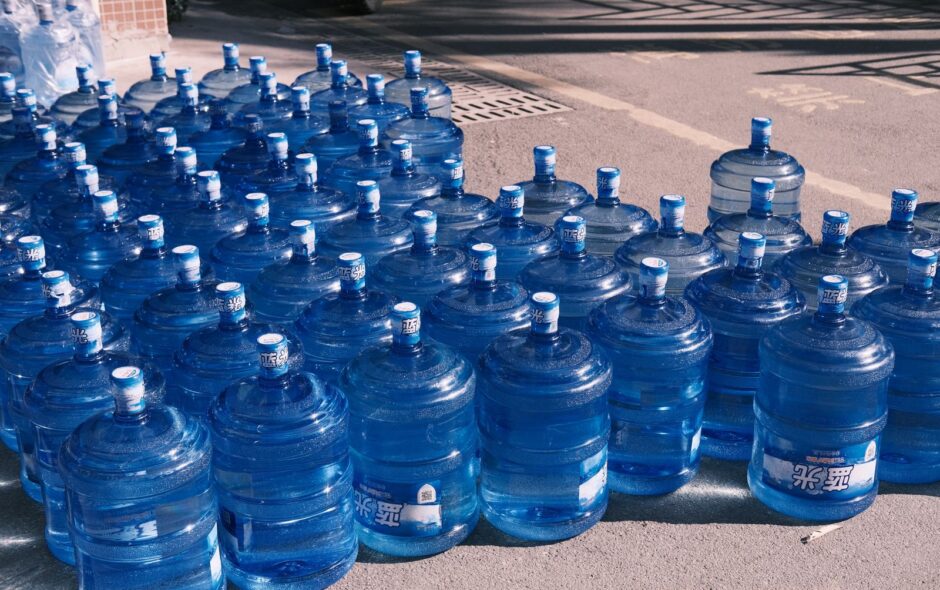
Three forms of container do three different jobs, and most households want all three. A rigid 5-gallon can is the reserve that is always full: fill it from the tap in June, date it, and swap the water on schedule. A bathtub bladder stores the most water in the least space, but only once it is filled, which is the day before landfall; the AquaTank2 that we reviewed is a food-grade polyurethane-coated nylon bladder from Extra Packaging, listed at 3 feet by 4 feet for the 60-gallon size, reusable and foldable. Sealed pouches or commercial bottled water are the kit water, dated by the maker; follow the maker’s dates and temperature limits rather than assuming a hot vehicle is suitable storage. Our water storage container roundup compares one of each, and the AquaTank2 review covers the bladder on its own.
Two containers to avoid: the thin jugs milk and juice come in, which are hard to clean and tend to split, and anything that has been used for fuel, cleaners or chemicals, which the CDC rules out outright. A clean food-grade can lasts for years.
When Stored Water Needs Treatment
Treated municipal tap water going into a clean, sanitized, tightly covered container does not need anything added; the CDC’s instruction is to fill and cover. Treat the water first if it comes from a private well, if a boil-water notice is already in effect when you fill, or if the container has been sitting open. The EPA’s emergency disinfection page gives the method, and these are its figures, copied exactly.
Use regular, unscented liquid household chlorine bleach that is labeled for disinfection and lists 6 percent or 8.25 percent sodium hypochlorite. The EPA says to use fresh bleach, or bleach stored at room temperature for less than one year. If the water is cloudy, let it settle and filter it through a clean cloth, paper towel or coffee filter first, because disinfection works less well in cloudy or colored water.
| Volume of water | 6% bleach | 8.25% bleach |
|---|---|---|
| 1 quart / 1 liter | 2 drops | 2 drops |
| 1 gallon | 8 drops | 6 drops |
| 2 gallons | 16 drops (1/4 teaspoon) | 12 drops (1/8 teaspoon) |
| 4 gallons | 1/3 teaspoon | 1/4 teaspoon |
| 8 gallons | 2/3 teaspoon | 1/2 teaspoon |
Stir and let the water stand for 30 minutes. The EPA says it should then have a slight chlorine odor; if it does not, repeat the dose and let it stand another 15 minutes. Double the amount of bleach if the water is cloudy, colored or very cold. If the chlorine taste is too strong afterward, pour the water between clean containers and let it stand a few hours. For a 60-gallon bladder the arithmetic from the EPA’s 8-gallon line is seven and a half times that dose: 5 teaspoons of 6 percent bleach, or 3 and 3/4 teaspoons of 8.25 percent, stirred in with a clean utensil before the bladder is capped.
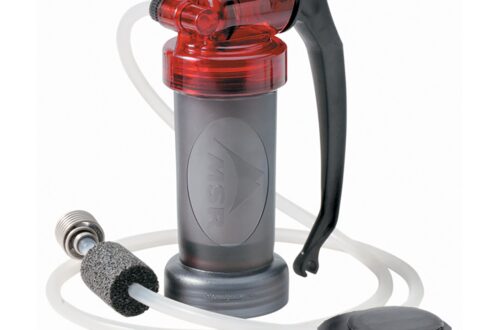
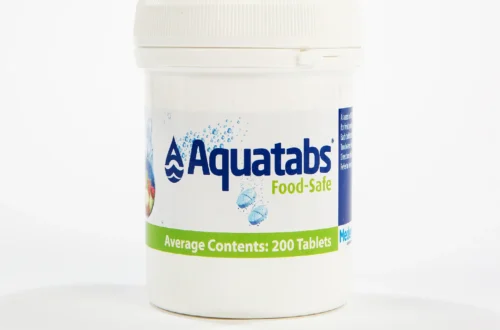
Boiling is the alternative when you have fuel: the EPA says to bring water to a rolling boil for at least one minute, three minutes above 5,000 feet, then let it cool and store it in clean covered containers. Purification tablets are the no-fuel alternative, and the dose that fits a can or a bladder is the subject of our water purification tablet roundup; Aquatabs 397 mg, at one tablet per 4 gallons, is the one sized for storage containers. What none of these do is remove chemicals: the EPA says boiling or disinfection will not destroy heavy metals, salts and most other chemicals, so water from a source that may hold fuel or runoff is not a storage candidate.
The Rotation Schedule
The CDC says to replace self-filled stored water every 6 months and to observe the expiration date on store-bought water. On the Gulf Coast the natural rotation dates are the start of hurricane season on June 1 and its end on November 30; fill or refresh the cans on the first, and again on the last day. Write the date on the can with a marker, on tape if you want to reuse the can, and put both dates in the same calendar as the smoke-detector batteries.
Rotation is also the test of the container. A can that smells of plastic or shows cloudiness when you empty it is telling you something about where it was stored. The old water is not wasted: it waters the garden, flushes a toilet, or fills the washing machine, and the can gets washed, sanitized and refilled the same afternoon. A bladder is not rotated; it is filled for a storm and drained after, and stored folded the rest of the year.
Where to Store It
The CDC says to keep stored water at a cool temperature, 50°F to 70°F, away from direct sunlight, and away from toxic substances such as gasoline or pesticides. That rules out most of the places water ends up: the sunny end of the garage, the shelf above the mower, the shed with the pool chemicals, and the attic. A Florida garage in July runs well past 70°F, and heat is what ages plastic and encourages anything living in the water to multiply.
Inside the house, the best spots are an interior closet floor, under a bed, the bottom of a pantry, or a hall cupboard, all of which stay close to the air-conditioned temperature of the house. Concrete is a concern mainly for taste and permeability: the bottled-water industry’s own storage advice, which cites the FDA, notes that plastic containers are slightly permeable, so vapors from solvents, fuels and household cleaners stored nearby can affect the taste and odor of the water. Set cans on a board or a shelf rather than directly on a garage slab that gets damp, and keep every chemical in the house somewhere else.
Weight matters for placement too. A 5-gallon can weighs a little over 40 pounds full, and twelve of them, a family’s two weeks, is nearly 500 pounds. Spread them across a closet floor rather than stacking them on a shelf that was never meant for it, and keep the ones you will grab for the car nearest the door.
Commercially Bottled Water: What the Dates Mean
Bottled water is the easiest storage there is and the most argued about, because of the date on the case. The position the International Bottled Water Association attributes to the FDA is that the FDA has determined there is no limit to the shelf life of bottled water, and that the FDA does not require an expiration date on bottled water products; the dates many bottlers print are lot codes for stock rotation. What changes with time is taste and odor, not safety, as long as the bottles stay sealed and are stored properly. The CDC’s own instruction is simpler: observe the expiration date for store-bought water.
For this guide, follow the CDC’s instruction to observe the expiration date on store-bought water and keep it cool and protected. Bottled water kept sealed, cool and out of the sun is, in the industry’s account, a taste-and-odor question rather than a safety one past the printed date, and it may taste flat or faintly of plastic when it is old; use it for cooking and washing first and the fresh cans for drinking. Bottled water left in a hot car or a sunny garage is a different case; the same industry page notes that heat and sun exposure can, infrequently, lead to algae or mold in the bottle. Treat the printed date as the CDC does, as the rotation reminder, and store the cases the way you store the cans.
The Day Before Landfall: Filling the Bathtub Bladder
Municipal water pressure usually holds until the power fails at the treatment plant or the pumps, which is why the bladder is filled the day before, not the morning of. When the hurricane warning is issued, or the day before forecast landfall at the latest, lay the bladder in the clean tub, connect it to the faucet and fill it from the cold tap. The AquaTank2’s maker lists the 60-gallon bladder at 3 feet by 4 feet and says it does not have to go in a bathtub, so check your tub’s interior dimensions first. It is reusable, so the same bladder serves every storm. Our AquaTank2 review walks through the fill and the siphon.
Treated municipal water going into a bladder straight from the tap needs no bleach by the CDC’s instruction, as long as the bladder is clean. If the utility has already issued a boil notice when you fill, dose it from the EPA table above, or drop in Aquatabs at one tablet per 4 gallons (15 for the full bladder), mix for 10 minutes and give the water its 30 minutes to stand. Keep the bathroom door closed and the bladder out of the sun. After the storm, when the boil notice lifts, drain it, rinse it, dry it completely and fold it away; the bladder’s water is this storm’s supply, not next year’s.
The bladder is also the reason the cans still matter. The bladder holds the two weeks; the cans hold the hours before you thought to fill it, and the water you take with you if you leave. Our evacuation car kit guide plans around two cans in the vehicle, and the hurricane kit checklist puts the water line next to everything else.
Common Questions
Does stored tap water go bad?
Properly stored treated tap water in a clean, sanitized, tightly covered food-grade container does not become unsafe on a schedule, but the CDC’s 6-month rotation exists because containers get opened, stored warm, or set next to the wrong things, and because a routine is what keeps the supply real. Rotate on the schedule and check the water as you pour it out.
Should I add bleach to tap water before storing it?
Not if it is treated municipal water going into a clean, sanitized container; the CDC says to fill and cover. If the water is from a private well, or a boil notice is in effect, disinfect it by the EPA’s table above: 8 drops of 6 percent bleach or 6 drops of 8.25 percent bleach per gallon, stirred, 30 minutes.
Can I store water in the garage?
Only if the garage stays within the CDC’s 50°F to 70°F, which on the Gulf Coast it does not in summer, and only if there is no gasoline, pesticide or pool chemical in it, which the CDC also rules out. An interior closet is the better answer; if the garage is the only space, put the cans on the coolest interior wall, off the slab, and rotate them on the 6-month schedule without fail.
Limits
This guide covers water you store before a storm. It does not cover making floodwater or a flooded well safe after one, where the organisms, the chemicals and the methods are different; that is the job of our post-storm water safety guide. The EPA’s bleach and boiling methods kill germs and do nothing about heavy metals, salts and most chemicals, so water from a questionable chemical source should not be stored at all. The bottled-water shelf-life statement is the FDA’s position as reported by the bottled-water industry’s association, because the FDA’s own page on it is no longer live; the CDC’s advice to observe the date is the one to follow when the two seem to differ. And none of this replaces a filter: a household that stores two weeks of water still wants a cyst-rated filter in the kit for the week the supply runs out, which our water filter roundup covers.
Updated 2026-11-01: replaced the bathtub-fit claim with the maker’s published size and a reminder to check the tub’s interior dimensions.
Some links on this page are Amazon affiliate links. If you buy through them, Ultimate Prepper’s Guide may earn a small commission at no extra cost to you.