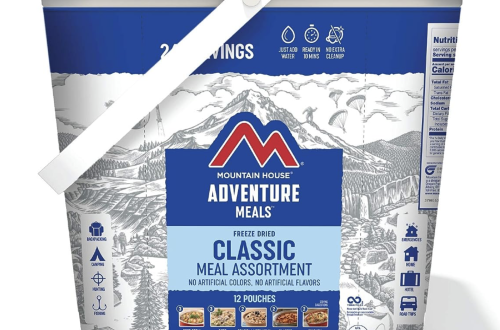
A three-day power outage is manageable. A week with no grocery access – like what follows a direct hurricane hit on the Gulf Coast – is a different problem entirely. The Ready Hour 120-Serving Emergency Meal Kit is a straightforward answer to that problem: shelf-stable food, sealed tight, no refrigeration, no guesswork.
What It Does
The Ready Hour kit packs 120 servings of freeze-dried and dehydrated meals into a single hard-sided bucket. Inside, you’ll find individually sealed mylar pouches grouped by meal type – breakfasts, entrees, drinks. Each pouch holds multiple servings, so you’re not tearing into a new one for every single meal. Add hot water, wait a few minutes, eat. That’s the whole process.
The bucket itself is resealable and stackable, which matters more than it sounds. These aren’t meant to live in a climate-controlled pantry – they’re going in a garage, a closet, or the back of a truck. The food carries a 25-year shelf life under proper storage conditions, which basically means keep it out of direct heat and you’re fine for the long haul.
Why It Belongs in Your Kit
Down here on the Gulf Coast, storm prep isn’t a hypothetical – it’s a seasonal checklist. When Idalia came through and knocked power out for five days in parts of the panhandle, people who had food that didn’t need refrigeration or a stove were in a completely different situation than those raiding gas station shelves. This kit covers roughly two weeks of food for one person at the listed serving sizes, or about a week for two people eating reasonable portions. That’s real coverage for a real event.
I’ve had this bucket in my storage room for over a year now, and what I appreciate is the pouch structure – you can crack one open, make a few meals, reseal it, and the rest of the kit stays untouched. No domino effect where opening one thing means you have to use everything quickly. That matters when you’re rationing through an extended outage or a slow-moving cleanup situation after a flood.
Beyond storm prep, this kind of kit makes sense for anyone with a cabin, a remote property, or a bug-out plan that involves more than 72 hours away from a grocery store. It’s not exciting food, but it’s calories and nutrients that require almost nothing to prepare – just water and some heat, and in a pinch, many of these will rehydrate with cold water too, just more slowly.
Honest Limitations
The serving sizes are optimistic. Ready Hour lists these as 120 servings, and technically that’s accurate – but the calorie counts per serving are often in the 150–250 range. If you’re counting on this as your only food source for active adults doing physical work post-storm, you’ll burn through it faster than the math suggests. Plan for that.
The flavor is fine. Not gourmet, not cardboard – somewhere in the middle. Some of the entrees are genuinely decent, a few are bland enough that you’ll want hot sauce in your kit. Don’t expect restaurant quality from freeze-dried food at this price point.
Water dependency is real. Every meal requires water to rehydrate, and several require a good amount of it. If your emergency scenario also involves a compromised water supply – which is common after flooding – you need a filtration solution sorted out separately before you rely on this kit.
How It Stacks Up
The closest direct comparison is the Mountain House 3-Month Emergency Food Supply, which runs significantly higher in price but delivers better-tasting meals and more calories per serving. If taste and calorie density are the priority and budget isn’t a hard constraint, Mountain House wins on those metrics. For most people building a basic emergency supply, though, the Ready Hour kit hits a more practical price point without cutting corners on shelf life or packaging integrity.
Augason Farms is another option in this space with similar pricing. The variety and texture on some Augason Farms products is slightly better, but the Ready Hour bucket edges it out on packaging convenience – the hard bucket with individual pouches is more durable and better organized than some of the Augason Farms can-based setups for grab-and-go situations.
Who Should Buy This
This is a good fit for anyone building out a two-week emergency food supply who wants something that doesn’t require rotation every year or careful pantry management. If you live in a hurricane zone, tornado alley, or anywhere that sees extended power outages, having one of these on the shelf is a straightforward call. It’s also worth it for anyone with a cabin or off-grid property where you want a food backup that just sits there until you need it.
If you’re looking for a daily meal replacement or a backpacking food solution, this isn’t that. The serving sizes and calorie counts aren’t designed for high-output activity, and the bulk bucket format isn’t trail-friendly. Look at single-serving options from Mountain House or Backpacker’s Pantry for those use cases.
Common Questions
How long does the food actually last?
Ready Hour advertises a 25-year shelf life, which is achievable if you store the bucket in a cool, dry place away from direct sunlight. In a hot garage in Florida, that number could realistically drop – anything consistently above 75°F will shorten the lifespan over time. A climate-controlled closet or interior room is the better call.
Do you actually need to cook these meals?
Most of the meals require hot water and a 10–15 minute rehydration time. Some will work with cold water in a pinch – it just takes longer and the texture suffers. A camping stove or propane burner paired with this kit gives you a complete solution that doesn’t depend on the power grid.
Is 120 servings enough for a family?
For a family of four, 120 servings covers roughly 10 days at three meals per day – less if you account for the lower calorie density of some servings. Most emergency planning guidance suggests two weeks of food on hand. For a family, you’d want two buckets minimum, or supplement with canned goods and other shelf-stable items.
Does it taste good enough to actually eat?
Honest answer: it’s decent. The pasta and rice-based entrees hold up better than the soups, and breakfasts like the granola and oatmeal options are genuinely fine. It’s not food you’d choose on a normal Tuesday, but in an emergency – or even just testing it out on a camping trip – you won’t be forcing it down.
Bottom Line
The Ready Hour 120-Serving Emergency Meal Kit is a solid, no-fuss food backup for anyone who wants real shelf-life coverage without spending a fortune. Just go in knowing the serving sizes run small and you’ll need a reliable water source to use it. Check current price on Amazon.
Some links on this page are Amazon affiliate links. I only recommend gear I personally own – if you buy through my link, I may earn a small commission at no extra cost to you.