
A solid 72-hour bug-out bag keeps you fed, hydrated, sheltered, and functional for three days without outside help – and that’s exactly the window most real emergencies demand. Whether you’re evacuating ahead of a Gulf Coast hurricane or riding out a grid-down situation after a wildfire, three days is the critical buffer between you and a bad outcome. Here’s what actually goes in one, and why each piece earns its spot.
What a 72-Hour Bug-Out Bag Actually Needs to Cover
A 72-hour bug-out bag – sometimes called a 3-day go bag or emergency evacuation pack – is a single portable backpack built to sustain one person for three days without resupply. The concept isn’t complicated, but the execution is where most people go wrong. They either overpack with gear they’ll never use, or they forget an entire survival category until it matters.
Every bag needs to cover five categories: water, food, shelter and warmth, medical, and tools. Miss one and you’ve built a bag with a hole in it. The sections below walk through each category with specific gear recommendations, honest weight tradeoffs, and real-world context – not a list of everything you could possibly pack.
Water: Start Here, Every Time
Water is the first thing to solve and the easiest to underestimate. Plan for a minimum of 2–3 liters per person per day – more if you’re moving through heat or doing physical work, which an evacuation almost always involves. That math adds up fast and makes carrying three days of water in bottles alone impractical for most people.
The smarter approach is to carry 1–2 liters of ready water and pair it with a reliable filtration system that lets you source water from wherever you end up – a river, lake, retention pond, or rain collection. Look for a filter rated at 0.1–0.2 microns, which handles the bacteria and protozoa threats you’re likely to encounter in North American freshwater sources. Down here in Florida, standing water after a storm is everywhere, but it’s also full of things you don’t want to drink without treatment.
Recommended gear:
Browse emergency water filters
View portable water purification options
Food: Calorie-Dense, Low-Fuss, Actually Edible
Three days without real food won’t kill you, but running on fumes during a high-stress evacuation tanks your decision-making and your morale. The goal isn’t gourmet – it’s calorie density, shelf stability, and minimal prep. You may not have access to clean water for cooking, a stove, or the time to sit down for a meal.
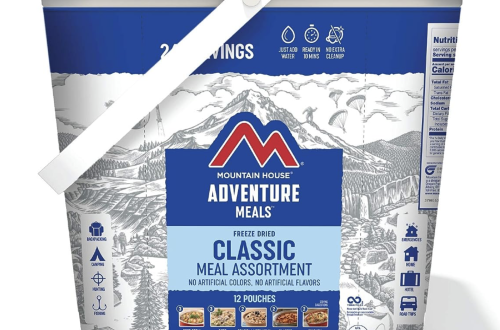
The best options for most bags: protein bars, jerky, trail mix, hard candy for quick energy, and emergency ration bars rated at 2,400–3,600 calories per pack. If you want something more substantial and have the space, freeze-dried meals with a 25-year shelf life are worth adding – just make sure you’ve also got the water and a stove to prepare them. Don’t pack food you’ve never tasted. Test it at home first.
Browse emergency food and survival rations
Tools: Multi-Use Only, No Deadweight
Space and weight are finite. Every tool in your bag should pull double or triple duty. A full toolkit belongs in your truck or shelter-in-place kit – not your bug-out bag. What belongs here are two or three high-quality multi-use items you’d actually reach for in a field situation.
The Gerber Suspension-NXT Multi-Tool covers 15 functions in a compact, reliable package – cutting, stripping wire, opening containers, field-repairing gear straps, and more. It’s the kind of tool that earns its weight every single outing. Pair it with the Rhino USA Survival Shovel, which handles digging, debris clearing, shelter prep, and doubles as a decent prying tool if you need to move something heavy after a storm. Both are solid buys. Both are also things I keep in my own hurricane kit – I’ve had the Gerber long enough to put it through actual use and it hasn’t let me down.
One honest warning: cheap folding knives and no-name multi-tools are everywhere on Amazon, and most of them will fail exactly when you need them. Buy quality tools once rather than replacing junk twice.
Medical: Further Than Basic Bandages
Cuts, burns, blisters, and sprains are the injuries that actually happen during evacuations – not the dramatic stuff. A blister that you ignore for a day can turn into something that slows you down significantly by day two. A cut that gets dirty and goes untreated can become infected fast in a humid Gulf Coast environment.
Your kit needs more than a travel-size first aid pack from a gas station. The SurviveX Large First Aid Kit is organized, durable, and stocked for real field use – not just minor scrapes. Add your personal prescription medications in a waterproof bag, a compression wrap or two, blister treatment, and any over-the-counter medications you rely on regularly. If anyone in your household takes daily meds, a 3-day supply in the bag is non-negotiable.
Shelter, Light, and Fire: Don’t Skip These
Exposure is a faster threat than hunger. If you end up stranded overnight – whether in a vehicle, a field, or a compromised structure – you need to control your body temperature. An emergency bivvy or mylar blanket weighs almost nothing and can genuinely save you from a dangerous situation. A lightweight tarp adds a weather barrier over your sleeping area or can be rigged as a rain catch.
For light, a quality headlamp beats a handheld flashlight every time – it keeps your hands free. Fire-starting tools (a ferro rod and a lighter at minimum) let you create heat, signal, and the ability to boil water if your filter is compromised. Don’t go single-source on fire – carry two methods.
Browse emergency lighting solutions
View fire starters and survival gear
Power and Communication: Keep the Phone Alive
After a hurricane or major storm, your cell phone becomes your primary connection to emergency alerts, family, evacuation route updates, and FEMA resources – assuming you can keep it charged. The grid may be down for days. A quality power bank with enough capacity for multiple full charges is worth every ounce of weight it adds to your bag.
A hand-crank or solar emergency radio is also worth packing. When cell towers are overloaded or down entirely, NOAA weather radio is often the most reliable way to get updated information on conditions and official instructions. Don’t rely solely on your phone for information during a large-scale emergency.
Browse portable power stations
View emergency radios
The Mistakes That Actually Get People in Trouble
Most bug-out bag mistakes fall into a short list of predictable patterns. Here are the ones worth actually correcting:
- Overpacking heavy gear. Your bag should sit under 25% of your body weight. A 200-pound person maxes out around 50 pounds, but most well-built bags land between 20–35 pounds. If your bag is too heavy to jog with, trim it.
- Skipping water purification. Carrying bottled water only is fine until it runs out. A filter gives you resupply options.
- Buying cheap tools. A multi-tool that snaps under pressure or a knife with a blade that folds on your hand is worse than no tool at all.
- Forgetting socks. It sounds trivial. Wet feet over 72 hours leads to blisters, reduced mobility, and real misery. Pack two extra pairs in a waterproof bag.
- Never testing the gear. Assemble the bag, then actually use it – even just for a weekend camp trip. You’ll find the problems before they matter.
Frequently Asked Questions
How heavy should a 72-hour bug-out bag be?
The general rule is to stay under 25% of your body weight, and for most adults a well-built bag lands between 20–35 pounds. The right weight is whatever you can carry for several miles without being wrecked – especially relevant if you’re evacuating on foot or moving through debris after a storm. Test it before you need it.
Should every family member have their own bag?
Yes, and it’s worth building kids into the plan too. Children old enough to manage a small pack can carry their own water, snacks, comfort items, and a change of clothes. It lightens the load on adults and gives kids a sense of involvement instead of helplessness. Distribute shared gear like the filter or first aid kit to whoever can handle the extra weight.
How often should you update your bug-out bag?
Check it every six months – that’s a reasonable cadence for rotating food and water, swapping out expired medications, and verifying batteries are still charged. A good trigger is daylight saving time changes, the same habit many people use for smoke detector checks. If you live in a hurricane zone, do a full inspection at the start of each season in June.
Do I need a dedicated bug-out bag if I have a vehicle emergency kit?
They serve different purposes. A vehicle kit is great for roadside breakdowns and short-term situations, but it stays with your car. A bug-out bag is on your back when you’re on foot, the roads are gridlocked, or you’re evacuating somewhere your vehicle can’t follow. In a serious hurricane evacuation, you may end up parking and walking. The bag is what goes with you regardless.
Building Yours: Where to Start
If you’re starting from scratch, don’t try to build the perfect bag in one shopping session. Start with the water and food categories – those have the clearest survival stakes – then add tools and medical, then fill in shelter and power. A functional 80% bag you actually have is better than a perfect bag you’re still planning.
Jump in with the high-impact gear first:
our Gerber Suspension-NXT Multi-Tool review
our Rhino USA Survival Shovel review
our SurviveX Large First Aid Kit review
Water filtration systems
Emergency food supplies
You’ll also want to think through your vehicle’s role in an evacuation plan – check out our breakdown of essential truck and car emergency kits for how those pieces fit together with your go bag.
Some links on this page are Amazon affiliate links. I only recommend gear I personally own – if you buy through my link, I may earn a small commission at no extra cost to you.