
Disclosure: this post contains Amazon affiliate links. If you buy through them, we may earn a small commission at no extra cost to you.
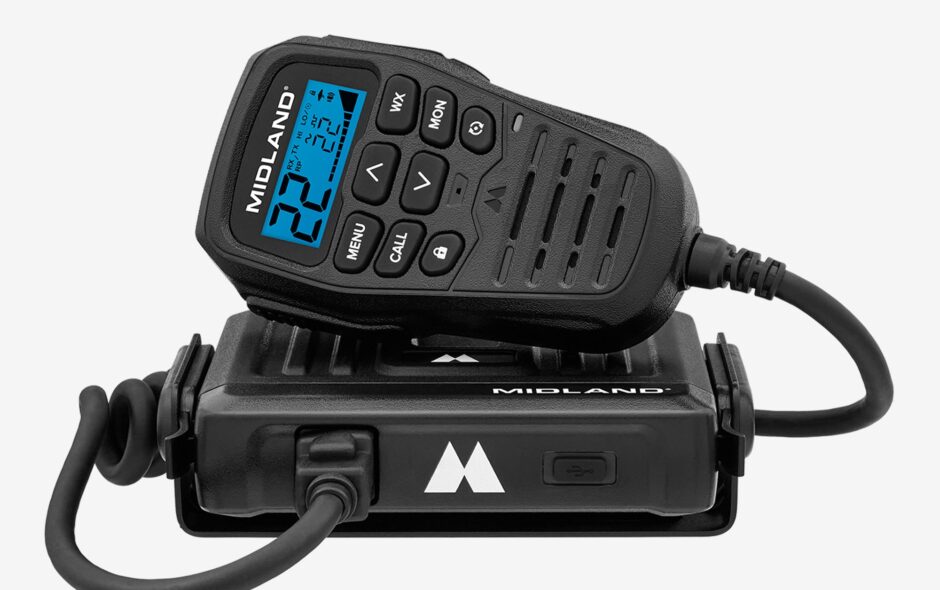
Handheld radios solve the problem of reaching the family across a neighborhood. They do not solve the problem of reaching them across a county when you are driving an evacuation route and the phones are dead. That job belongs to a vehicle-mounted GMRS radio, and the Midland MXT275 is the one built for people who do not want a radio project: 15 watts, every control on the microphone, a magnetic antenna that lives on the roof, and NOAA weather alerts on the drive.
This review covers what the MXT275 does, the GMRS license it requires, the specs Midland publishes, the install basics, and the radios to compare it with. For where a mobile radio fits in a layered plan, see our emergency communications guide.
Who It Is For
The MXT275 is for a household that already holds, or will get, the family GMRS license and wants one vehicle to act as the base station: the truck that leads an evacuation, the car that runs supply trips after a storm, or the one that sits in the driveway as the home radio with a 12 volt supply. Because the radio body hides under a seat or dash and everything happens on the handset, it suits drivers who want a radio that works like a CB without the CB’s limits. It is not for someone who needs a radio in a pocket; that is a handheld such as the Rocky Talkie 5 Watt.
The convoy case is the clearest one. Two or three vehicles leaving the coast on the same evacuation route lose cell service within an hour of the storm making landfall, and the detours start at the first flooded underpass. A mobile radio in the lead vehicle and GMRS handhelds in the others keeps the group together through every turn, and the lead vehicle can reach a repeater that the handhelds cannot. The same radio, parked in the driveway afterward, is the household’s link to neighbors running generators three streets away.
Key Specs
| Spec | Midland MXT275 (Midland figures) |
|---|---|
| Transmit power | 15 W |
| Channels | 15 high-power GMRS channels (1 to 7 and 15 to 22), 8 split-tone repeater channels, 142 privacy codes |
| Controls | Fully integrated control microphone; all functions on the handset |
| Weather | NOAA weather scan and alert |
| Antenna | External magnetic-mount antenna included |
| Power | 12 V vehicle power; USB-C port for charging devices |
| Size | 4 1/4 x 5 1/16 x 1 7/16 in with bracket |
| Weight | Not published |
| Water resistance | None stated; the owner manual says it is not water resistant |
| License | FCC GMRS license, ten years, covers the family |
What We Like
Fifteen watts into a roof-mounted antenna is a different class of radio from any handheld. The handheld radios in our walkie talkie roundup top out at 5 watts with a rubber antenna at chest height; the MXT275 triples the power and puts the antenna on the highest metal surface you own, which is what actually extends range. Midland publishes eight split-tone repeater channels, so the radio can work a local GMRS repeater without you learning what split tones are. For short-range family radios, our Midland T290VP4 review covers a GMRS pair.
The microphone-mounted controls are the reason to pick this model over Midland’s larger mobiles. The radio body bolts out of sight with the included bracket, the mic clips where a CB handset would, and channel changes, weather scan and volume happen in your hand without looking down. NOAA weather alert on a mobile radio means the vehicle itself can wake you to a warning at a shelter or a rest stop. The USB-C port on the body charges a phone from the same 12 volt feed.
The license math works in its favor too. One FCC GMRS license covers the licensee and every family member for ten years, on every GMRS radio they own, so the MXT275 adds no paperwork to a household that already runs GMRS handhelds. The 142 privacy codes match what Midland’s handhelds use, which keeps setup to picking a channel and a code once and writing both on a card in the glovebox.
Limitations
It needs the GMRS license, like every GMRS radio, and it needs a vehicle. There is no battery; the MXT275 runs on 12 volts, so using it as a home base means a power supply or a power station with a 12 volt output, which our power outage checklist covers from the power side. Midland’s manual says the unit is not water resistant, so an open-cab vehicle or a boat is out. Midland publishes no weight for it and no range figure beyond the general GMRS expectation, which is honest but leaves planning to you: with a roof antenna, expect several miles in a built-up area and far more across open country or water, not a county in every direction.
Installation is simple but not nothing. The magnetic antenna wants a flat steel roof, the coax has to come inside without pinching in a door seal, and the power leads should go to the battery or a fused accessory circuit, not a cigarette plug, if you want the full 15 watts without voltage sag. Midland’s instructions cover it; budget an hour and a fuse tap.
Finally, 15 watts is a lot of radio in a small cab. Midland’s manual covers antenna placement and transmit etiquette; the short version is to keep the antenna on the roof rather than inside the vehicle, and to use the high-power channels only when the low-power ones will not reach. Fifteen watts across a parking lot is wasted power and a louder signal for everyone else on the channel.
Alternatives
If the vehicle install is the obstacle, the Rocky Talkie 5 Watt gives you the same GMRS license, repeater channels and IP67 sealing in a handheld that clips to a strap. If licensing is the obstacle, nothing in GMRS avoids it; the FRS radios in the roundup are the license-free route at a fraction of the range. If you are tempted by a BaoFeng UV-5R for the vehicle instead, read our UV-5R review first: that radio needs an amateur license and is not certified for GMRS at all.
Midland also sells larger MicroMobile models with more power and a separate control head. They make sense for a truck that will be the fixed hub of a group and has dash space to spare; for a family vehicle that has to stay a family vehicle, the MXT275 hides better and still keeps every function within reach of the driver.
Common Questions
Does the MXT275 talk to handheld GMRS radios?
Yes. It uses the same GMRS channels and privacy codes as any GMRS handheld, including Midland’s own GXT series and the Rocky Talkie, so the vehicle can be the hub for a family carrying handhelds.
Do I need a separate license for the vehicle radio?
No. The FCC GMRS license covers the licensee and family members on any GMRS radio they use, mobile or handheld, for ten years.
Can I run it at home during an outage?
Yes, with a 12 volt source. A power station with a 12 volt output or a dedicated supply works; the antenna then needs a steel surface or a mounting plate, and height matters more than anything else you can change.
Bottom Line
The Midland MXT275 is the GMRS radio for the vehicle that leads your family out of a storm zone and the easiest mobile radio to live with, because the whole interface fits in your hand. Pair it with handhelds on the same license and the household has a hub with real reach.
Some links on this page are Amazon affiliate links. If you buy through them, Ultimate Prepper’s Guide may earn a small commission at no extra cost to you.


