
A weather radio does one job that nothing else in your kit can do: it receives the National Weather Service warning directly from the transmitter, with no cell tower, no internet and no app in between, and it wakes you up to deliver it. On the Gulf Coast that job comes up several times a season, and the night a tornado warning is issued inside a tropical storm is exactly the night the phone network is at its worst.
This roundup covers five current radios that we would put in a hurricane kit: four portable crank and solar units and one desktop alert radio that stays plugged in. Every figure below comes from the manufacturer’s own product page, linked in the table, and we say so where a maker does not publish a number. For the bigger picture of how a weather radio fits with two-way radios and satellite gear, start with our pillar guide, Emergency Communications for Preppers.
What Makes a Weather Radio Worth Buying
Three things separate a useful emergency radio from a novelty. First, it must receive the seven NOAA Weather Radio frequencies between 162.400 and 162.550 MHz; an AM/FM radio with a “weather” sticker that cannot do this is not a weather radio. Second, it must have an alert function that responds to the 1050 Hz warning tone, so it sounds off on its own instead of waiting for you to turn it on. Third, for a radio that lives in a kit, it must charge from more than one source, because the outage will outlast the battery. A hand crank is the guarantee, a solar panel is the convenience, and a USB port is how you top it up from a power bank or a power station while the grid is still on.
The desktop alert radio is a different animal and a different job. It does not need a crank or a flashlight; it needs SAME, Specific Area Message Encoding, which lets you program your county so it only sounds for warnings that cover you. The NWS notes that reliable reception typically reaches about 40 miles from a transmitter over level terrain, so check the coverage map for your county before you buy either kind.
The Five Radios Compared
| Radio | NOAA alert | Power sources | Battery | Light | Phone charging | Weight |
|---|---|---|---|---|---|---|
| Kaito KA500L | Yes, all 7 NOAA weather channels (listing) | Tilting solar panel, dynamo hand crank; 4-way powered per the listing | Built-in rechargeable batteries; capacity not published on the listing | Flashlight with SOS signal, reading lamp | Not stated on the listing | 1.15 lbs (listing) |
| Kaito KA332W | All 7 NOAA weather channels; an alert is not stated on the listing | Hand crank, solar; 5-way powered per the listing | Not published on the listing | 3-LED flashlight | USB out (5V) | 1 lb (listing) |
| Midland ER310PRO | Yes | Hand crank, solar, USB-C | 10,000 mAh lithium-ion, 200+ hours of radio operation | Cree LED with SOS strobe | USB-C power bank | Not published |
| Sangean MMR-88 | Yes, all seven frequencies; Public Alert certified | Hand crank, solar, micro-USB | 18350 lithium 3.7 V, 850 mAh | Triple LED, four patterns including SOS; siren | USB-A out, 5 V / 0.3 A | 0.83 lb (377 g) |
| Midland WR120B (desktop) | Yes, SAME county alerts, 60+ alert types, Public Alert certified | AC adapter with 3 x AA battery backup | None (AA backup) | None | None | Not published |
Read the table by the job. The three Midland ER models and the Sangean are kit radios: they bring in the warnings, light a room, and keep a phone alive. The WR120B is the household alert radio that sits on a nightstand year round and does nothing until a warning covers your county.
Kaito KA500L: The Full-Size Kit Radio
Our former pick here, the Midland ER310, is out of stock on Amazon, so the full-size kit radio slot now goes to the Kaito KA500L. Kaito lists it as a 4-way powered AM/FM/shortwave radio with NOAA weather alerts on all seven US and Canadian weather channels. The solar panel tilts to follow the sun and powers the radio directly as well as charging its built-in batteries, and the hand crank drives what Kaito calls an AC-type brushless generator. It carries two lights, a bright reading lamp and a flashlight that doubles as an SOS signal, and weighs 1.15 pounds. Kaito’s listing does not publish a battery capacity or a phone-charging output, so if the radio also has to charge a phone, the ER310PRO below is the stronger choice. If the ER310 comes back in stock, our full ER310 review explains why we liked its AA backup.
Kaito KA332W: The Compact Crank Radio
The Midland ER40 we listed here is out of stock, so the compact slot now goes to the Kaito KA332W. Kaito lists it as a compact 5-way powered AM/FM radio with all seven NOAA weather channels, a hand crank and a solar panel, a 3-LED flashlight, a standard 5V USB output that can top up a phone (Kaito notes it may not suit every phone), and an earphone jack. The listing gives a weight of 1 pound and does not mention an automatic weather alert, so treat it as a radio you turn on to listen rather than one that wakes you. Choose it for a glove box, a second kit, or a child’s room, where a smaller radio that still does the three essential things is better than a larger one that never gets packed.
Midland ER310PRO: The Power-Bank Radio
The ER310PRO takes the ER310 formula and multiplies the battery. Midland rates its lithium-ion pack at 10,000 mAh and more than 200 hours of radio operation, charges it over USB-C as well as by crank and solar, and lets you draw from it over USB-C to recharge a phone, which puts it in power-bank territory rather than trickle-charge territory. It keeps the NOAA alerts, the Cree LED flashlight with SOS strobe, and the AM/FM bands, and Midland’s page and the listing both describe a Bluetooth speaker function. Midland does not publish a weight. This is the radio for a household that wants one device to cover the weather band and the phone charging for several days, and it is our substitute for the Eton FRX3, which no longer has a featured listing.
Sangean MMR-88: The Public Alert Certified Portable
The MMR-88 is the one non-Midland kit radio on this list, and the only portable here whose maker publishes a complete spec sheet. Sangean lists reception of all seven NOAA frequencies with weather alert, Public Alert certification on the unit, a hand crank generator, a solar panel and micro-USB charging, an 18350 lithium cell rated 3.7 V and 850 mAh, a triple-LED light with low, high, blinking and SOS patterns, an emergency siren, 19 station presets, a 40 mm speaker, a headphone jack, and a USB-A output of 5 volts at 0.3 amps for charging a phone slowly. It measures 5.99 by 3.34 by 2.72 inches and weighs 0.83 pounds. The small battery is the trade-off: it is a radio first and a power bank only in a pinch. Pick it for build quality and the certification, and pair it with a separate power bank.
Midland WR120B: The Desktop Alert Radio
Every house in hurricane country should have one of these plugged in, and it is the only radio on this list that is not meant to leave the shelf. The WR120B runs on its included AC adapter with three AA batteries as backup, programs by SAME county code so it only alerts for warnings that cover you, and Midland lists more than 60 alert types, an alert override, a selectable high, medium or low siren, color-coded alert level LEDs and Public Alert certification. It doubles as an alarm clock. It has no flashlight, no crank and no phone charging, because its job is to wake you up when a tornado warning is issued at two in the morning, and it does that better than any kit radio. Our WR120B review walks through the SAME programming.
Which One for Which Reader
Buy the WR120B first if you have no weather radio at all; the warning that wakes the house is worth more than any feature on a portable. Add the Kaito KA500L for the kit if you want a full-size crank and solar radio with shortwave, or the Midland ER310 with its AA backup once it is back in stock. Choose the ER310PRO instead if the radio also has to be the household’s phone charger for several days, and the Kaito KA332W if you need a second, smaller unit for a vehicle or a bag. Choose the Sangean MMR-88 if you want a certified, fully specified portable from a radio maker and already carry a power bank. Whichever kit radio you choose, store it charged and crank it for a minute once a month so you know the generator still works. For the two-way side of the plan, see Best Walkie Talkies for Preppers, and the layered radio plan below shows how a weather radio, a kit radio and two-way radios work together.
A Layered Radio Plan for Hurricane Season
A weather radio is one of three radio jobs in a hurricane plan, and no single radio does all three. The desktop alert radio wakes the house when a warning covers your county. The kit radio keeps the broadcasts and the warnings coming once the power is out. A pair of two-way radios lets the people in your household talk to each other when the phones cannot, which a weather radio never will, because it only receives. Ready.gov’s basic kit list names both of the first two: a battery-powered or hand-crank radio and a NOAA Weather Radio with tone alert.
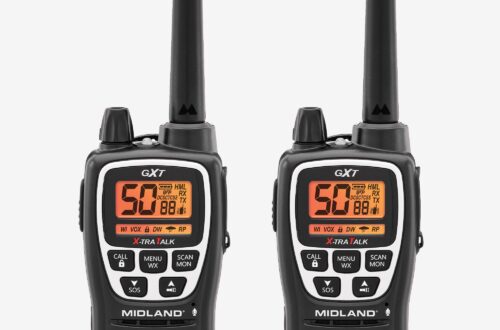
For the two-way job, the Midland GXT1000VP4 is the GMRS pair we cover in our GXT1000VP4 review, and our walkie-talkie roundup compares it with the alternatives. GMRS needs an FCC license; the FCC issues it for a ten-year term, and it covers the activities of the licensee and immediate family members.
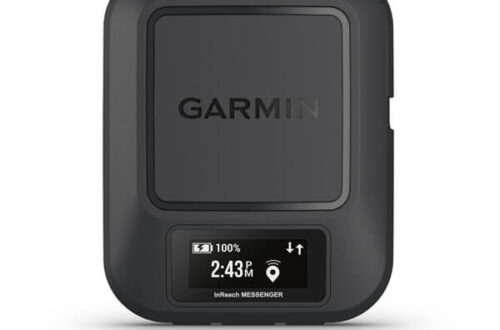
Do not count on any of these radios to reach emergency services. Weather radios only receive, and FRS and GMRS handhelds reach other people’s radios, not a 911 dispatcher. For a call for help with no cell service, a satellite messenger with an SOS function is the tool; our satellite messenger roundup compares them.
Check the whole set in May, before the Atlantic hurricane season opens on June 1. Confirm the desktop radio still has your county code and fresh backup batteries; charge the kit radio, run it on each of its power sources and confirm its USB output still charges a phone; and charge the handhelds and do a radio check between them.
Common Questions
Does a crank radio really charge a phone?
Only a little. Cranking generates a trickle that will keep the radio itself running, but phone charging from these units comes from the internal battery, which you should fill from the wall, a power bank or the sun before the storm. The ER310PRO’s 10,000 mAh pack is the exception that can charge a phone several times; the others are for topping up, not refilling.
What is SAME, and do I need it on a portable?
SAME is the county-code filtering that stops the radio from alerting for warnings that do not cover you. It matters most on the desktop alert radio that is always on. On a portable kit radio the alert function is usually broadcast-wide; that is acceptable in an emergency, when you want to hear everything, and it is why the two radios work as a pair.
How long will the batteries last in storage?
The lithium-ion packs in these radios lose charge slowly in storage and dislike heat, which matters in a Florida garage. Charge the radio fully when a watch is issued, keep it out of a hot car, and keep a set of alkaline AA cells with any radio that can run on them so it works even if the pack has drifted down. Our power outage checklist covers charging order for the whole kit.
Bottom Line
A desktop alert radio and a crank radio in the kit cover the two jobs a weather radio has to do: wake you for the warning and keep the warnings coming when the power is out. The Midland WR120B is the alert radio. For the kit, the Midland ER310 is the radio we would hand to anyone who asked, and while it is out of stock the Kaito KA500L fills the same role.
Updated 2026-11-01: merged our earlier emergency radio roundup into this page, adding the layered radio plan, the two-way radio pick and the pre-season check.
Updated 2026-11-11: the Midland ER310 and ER40 were out of stock on Amazon, so those two slots now go to the Kaito KA500L and KA332W, described from their listings.
Some links on this page are Amazon affiliate links. If you buy through them, Ultimate Prepper’s Guide may earn a small commission at no extra cost to you.