Disclosure: this post contains Amazon affiliate links. If you buy through them, we may earn a small commission at no extra cost to you.
The water problem after a hurricane is rarely that there is none. It is that the tap is under a boil notice, the stove is a camp burner with one canister of fuel, and the bathtub bladder you filled the day before is 60 gallons of water you would like to be certain of. Boiling 60 gallons a quart at a time is not a plan. A tablet that treats 4 gallons at a go, in 30 minutes, with no fuel and no pot, is.
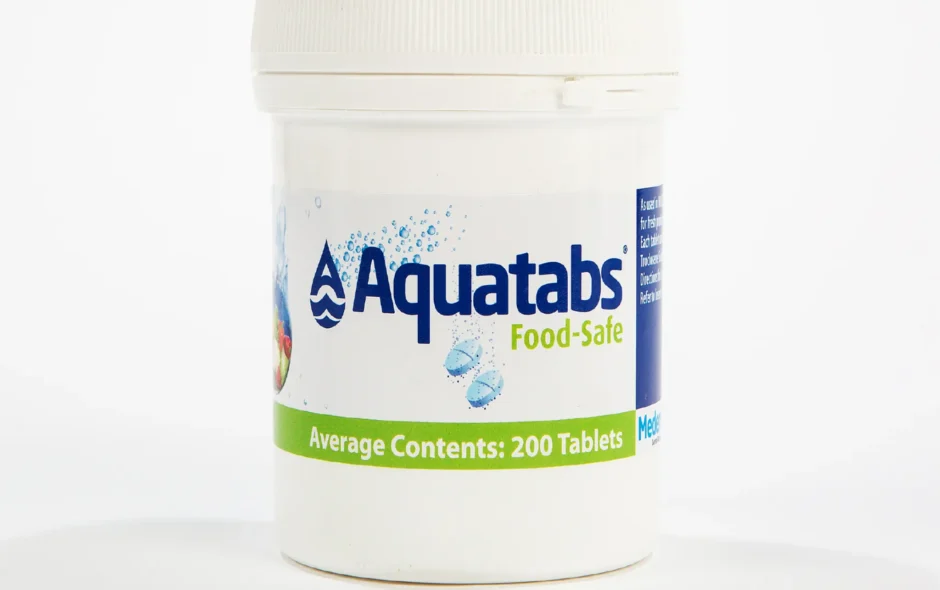
Aquatabs 397 mg are that tablet: a chlorine-based water purification tablet, EPA-registered, that the accepted label rates to treat 4 gallons of clear water per tablet against bacteria, viruses and Giardia cysts in 30 minutes. This review covers who it suits, the label figures, where it falls short (Cryptosporidium, above all), and the tablets and filters to compare it with. For the whole category, start with our water purification tablet roundup, and for how much water you need in the first place, our guide to how much water to store for a hurricane.
Who It Is For
Aquatabs 397 mg are for the household that stores water in bulk: a bathtub bladder, five-gallon cans, a rain barrel used as a backup, or a well that loses its treatment when the power fails. The 4-gallon dose is the point. Smaller Aquatabs sizes and most competing tablets are dosed per quart or per liter, which is right for a hiker’s bottle and wrong for a 20-liter can. Round up to whole tablets for a can, mix for 10 minutes, and let it stand 30 minutes before drinking.
They are also for the kit of anyone who should not use iodine. The CDC says people who are pregnant, have thyroid problems or are hypersensitive to iodine should avoid iodine-treated water, and Aquatabs are iodine free. They are not the tablet for someone planning to drink from floodwater or a cattle pond, because the label does not claim Cryptosporidium; that reader wants a filter, or a chlorine dioxide tablet with its 4-hour wait.
Key Specs
| Spec | Aquatabs 397 mg (EPA-accepted label and maker’s pages) |
|---|---|
| Active ingredient | Sodium dichloroisocyanurate (NaDCC) 16.88% |
| Dose, clear water | 1 tablet per 4 gallons / 16 quarts / 15 liters (2.6 mg/L available chlorine) |
| Dose, river, lake, well or cistern water | 1 tablet per 1.5 gallons / 6 quarts / 5.8 liters (6.5 mg/L available chlorine), water at or above 40°F |
| Contact time | Mix well for at least 10 minutes, then stand 30 minutes before drinking |
| Organisms on the label | Bacteria (Raoultella terrigena), viruses (poliovirus and rotavirus), cysts (Giardia muris) |
| Cryptosporidium | “Not tested against cryptosporidium” (label) |
| Pre-treatment | Remove suspended material by filtering, straining through a doubled cloth, or settling, then treat in a clean container (label) |
| Pack | 100 tablets, foil strip packs; expiry date printed on the pack |
| Shelf life | Strip packs 2 to 5 years (maker FAQ); protect from temperature extremes and humidity |
| Treated water | Stays protected in a closed container for at least 24 hours (maker FAQ) |
| Certifications | EPA Reg. No. 71847-4; certified to NSF/ANSI Standard 60 |
| Iodine | Iodine free (label) |
The dose arithmetic for a Gulf Coast household: a 60-gallon bathtub bladder filled from a municipal tap takes 15 tablets at the clear-water dose; a 5-gallon can takes two tablets, since one covers only 4 gallons; the 100-tablet pack treats 400 gallons of clear water, which is the CDC’s two-week supply for a family of four seven times over.
What We Like
The 4-gallon dose is the reason to buy this size, and it turns out to be the reason the tablet fits a hurricane plan better than any per-quart tablet. Stored water on the Gulf Coast lives in cans and bladders, not bottles. A tablet that matches the container means no splitting, no counting, and no excuse not to treat the whole supply when the boil notice comes through.
The label is specific in a way most tablets are not. It names the test organisms, gives two doses with the chlorine concentration each produces, tells you to pre-filter and how, and says in plain words what it has not been tested against. Aquatabs’ FAQ adds the two figures a planner needs: strip packs keep 2 to 5 years, and treated water in a closed container stays protected for at least 24 hours, which is how long a filled can sits between the morning you treat it and the evening you drink it.
Thirty minutes is the other advantage. Chlorine dioxide tablets need 4 hours in the dark for their full claim; Aquatabs are ready in half an hour, with a 10-minute mix first. In the hours after landfall, when everyone is thirsty and nobody wants to run the stove, that difference is the whole reason tablets exist. The chlorine residual is also doing something a boil does not: it keeps working in the container.
Limitations
Cryptosporidium is the one that matters. The label says “not tested against cryptosporidium,” and the CDC says chlorine does not work well against parasites in general. Cryptosporidium is a floodwater and livestock-runoff organism, which is exactly what fills a ditch after a Gulf Coast storm, so Aquatabs are the tablet for treating water you already trusted enough to store, not for making surface water safe on their own. For untreated water from a stream or pond, use a filter rated for cysts first and a tablet second, or a chlorine dioxide tablet with its 4-hour wait; floodwater that may carry fuel or chemicals is not a source any tablet or filter makes safe, per the CDC.
Taste is chlorine. The maker claims no unpleasant odor and “great taste,” but the two label doses are different chlorine levels: 2.6 mg/L for clear water, which is in the range of a municipal tap, and 6.5 mg/L for lake and well water, which is two and a half times that and will be noticeable. The EPA’s emergency disinfection page suggests pouring chlorinated water between clean containers and letting it stand a few hours if the taste is too strong, and that applies here too.
The 397 mg tablet is the wrong size for a water bottle. There is no clean way to treat a quart with it; buy the small Aquatabs or a per-liter tablet for the pack. And like every disinfectant, it does nothing about chemicals: the EPA says disinfection will not destroy heavy metals, salts and most other chemicals. The label does not state a shelf life in years, only the expiry on the pack and a warning against humidity; Aquatabs’ FAQ gives the 2-to-5-year range, and a strip that has been opened and left damp in a humid Florida garage will not reach it.
Alternatives
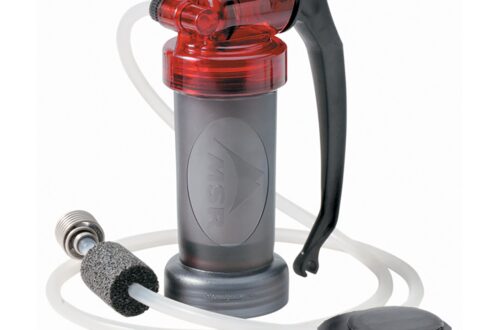
The Potable Aqua iodine tablets are the traditional kit tablet, two per quart with a 30-minute wait, effective against bacteria and Giardia by the maker’s figures, not Cryptosporidium, and subject to the CDC’s iodine health cautions. For a bag that may draw from a stream or a retention pond, a cyst-rated filter does what no chlorine tablet does: the Sawyer Mini is the smallest, and the Grayl GeoPress is the one whose maker calls it a purifier and claims viruses as well. The best pairing for a Gulf Coast kit is a filter for the source water and Aquatabs for the stored water.
Common Questions
How many Aquatabs do I use in a 5-gallon can?
One 397 mg tablet treats 4 gallons of clear water, and the label gives no 5-gallon dose. Rounding up to two whole tablets in a 5-gallon can puts more chlorine in the water than the clear-water dose and less than the label’s surface-water dose; that is a rounding, not a label instruction, so treat in the label’s own volumes where you can. Mix for 10 minutes and wait 30.
Do Aquatabs kill Cryptosporidium?
The label says the product was not tested against it, and the CDC says chlorine does not work well against parasites. Treat the answer as no. Filter cyst-sized organisms out first with a filter whose absolute pore size is 1 micron or smaller (the CDC’s criterion for parasites), or use a chlorine dioxide tablet with its full 4-hour contact time.
How long does Aquatabs-treated water stay safe?
Aquatabs’ FAQ says at least 24 hours in a closed container, because the tablet keeps releasing chlorine as it is used up. Keep the lid on and the container out of the sun; the FAQ gives no retreatment schedule, so follow the label if the water sits longer or has been opened.
Bottom Line
Aquatabs 397 mg are the tablet to keep with the cans and the bathtub bladder: one tablet per 4 gallons, 30 minutes, iodine free, and a label that is honest about Cryptosporidium. Pair them with a cyst-rated filter for anything drawn from outside and they cover the water half of a hurricane kit.
Some links on this page are Amazon affiliate links. If you buy through them, Ultimate Prepper’s Guide may earn a small commission at no extra cost to you.