If you’ve ever sat in the dark after a hurricane, watching your refrigerator tick toward room temperature while your phone battery drains, you already know exactly why a serious power station matters. The Anker SOLIX F2000 (also sold as the PowerHouse 767) is built for that situation – not just keeping your phone alive, but actually running your home through a multi-day outage.
What It Does
The SOLIX F2000 is a 2,048Wh lithium iron phosphate (LFP) battery with a 2,400W AC inverter that can surge up to 4,800W. In plain terms: it has enough capacity to run a full-size refrigerator for the better part of two days, and enough output to power most household appliances – including things people assume you can’t run off a portable station, like a washing machine, hair dryer, or coffee maker. It has 15 output ports total, covering AC, USB-A, USB-C, car outlet, and even a 30A RV port.
The LFP battery chemistry is worth calling out specifically. Unlike standard lithium-ion stations, LFP holds up to 3,000 charge cycles before dropping to 80% capacity. That’s roughly a decade of regular use. It also charges fast – you can hit 80% in about 45 minutes using the dual AC input, and it supports solar input up to 1,000W if you pair it with panels.
Why It Belongs in Your Kit
Here on the Gulf Coast, power outages aren’t a rare inconvenience – they’re a scheduled part of hurricane season. After Idalia and the parade of named storms before it, I stopped treating backup power as optional. The SOLIX F2000 is what I landed on after comparing half a dozen large-format stations, and it’s been my go-to unit ever since. When a storm rolls through and the grid goes down for three or four days, this thing carries the load that actually matters: the fridge, a box fan, device charging for the whole household, and a CPAP at night.
Beyond storm prep, this unit genuinely earns its footprint in other scenarios. Running a weekend off-grid at a hunting camp or remote property? It’ll cover power tools, lighting, and small appliances without the noise and fumes of a gas generator. Extended car camping with a family? Same deal. It’s heavy – 99 pounds – so you’re not backpacking with it, but it rolls on its own wheels and fits in most truck beds or SUV cargo areas without drama.
The 30A RV outlet is a legitimate feature if you’re running an RV or a trailer at a campsite without shore power hookup. That alone separates it from most competitors in this class who include the port as an afterthought without the amperage to back it up.
Honest Limitations
Ninety-nine pounds is not a small number. Two people can manage it, but if you’re planning to load and unload this thing solo on a regular basis, factor that into your decision. The built-in wheels help, but it’s not going anywhere quickly.
The price point is real. This is a premium unit with a premium price tag, and if your power needs are modest – charging devices, running a small fan, keeping a lamp going – you’re paying for capacity you won’t use. There are solid options at half the price that cover lighter loads just fine.
The app connectivity works, but it’s not essential and occasionally temperamental. If you’re the kind of person who wants to monitor wattage draw from their phone, it’s there. If you’re not, don’t factor it in as a selling point – just use the onboard display, which is clear and easy to read.
How It Stacks Up
The two competitors that come up most often in this category are the EcoFlow DELTA Pro and the Jackery Explorer 2000 Pro. The EcoFlow DELTA Pro matches the SOLIX F2000 on capacity and actually beats it on charging speed, but it uses standard lithium-ion chemistry instead of LFP – meaning a shorter cycle life over the long run. If fast recharge is your priority and longevity is secondary, the DELTA Pro is worth a look. I covered the EcoFlow DELTA 2 as my medium power supply option – you can read that review here – and the brand holds up well overall.
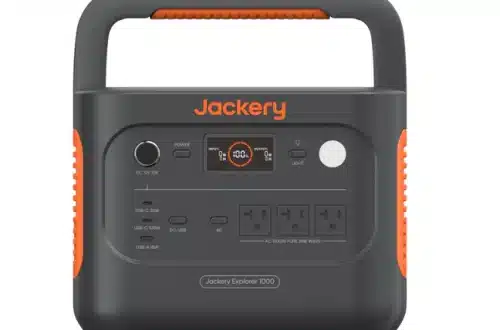
The Jackery Explorer 2000 Pro is lighter and slightly more portable, but it tops out at 2,200W output, which means some appliances that the Anker handles without issue (washing machine, larger power tools) won’t work. If portability and weight are your main constraints and you’re not trying to run high-draw appliances, Jackery is a reasonable trade-off. For pure capability and long-term durability at the high end, the SOLIX F2000 is the harder unit to argue against.
Who Should Buy This
This is the right station if you’re serious about running real household loads through an extended outage – a working refrigerator, medical equipment, multiple devices, actual appliances. It’s also a strong pick for anyone who wants one unit to cover both home backup and off-grid power at a campsite or remote property, and doesn’t want to replace it in five years.
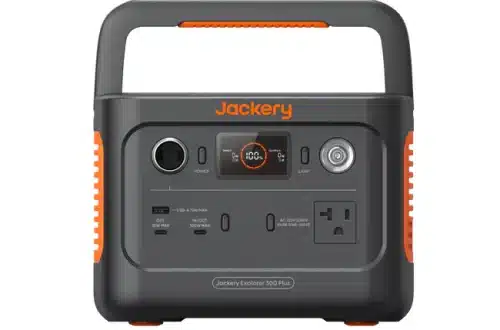
Skip it if your backup power needs are light, if weight and portability are a genuine constraint, or if your budget doesn’t stretch to a premium unit. The Jackery 300 covers small-load scenarios at a fraction of the price, and there’s nothing wrong with right-sizing your kit.
Common Questions
Can it actually run a full-size refrigerator?
Yes, with realistic expectations. A standard refrigerator draws roughly 100–200W while running, so the 2,048Wh capacity can keep it going for 24–40 hours depending on how often the compressor cycles. It won’t run indefinitely, but it covers a typical 2–3 day outage if you’re not also running everything else at full load simultaneously.
How long does it take to recharge?
Using dual AC input (plugged into a wall outlet), you’re looking at around 1.5 hours to full from empty – or about 45 minutes to 80% with the fast-charge setting. Solar recharge time depends entirely on your panel setup and sun conditions; with 1,000W of solar input, a full charge takes roughly 2–3 hours of good sun.
Is it safe to run indoors?
Yes. This is one of the core advantages over a gas generator – no combustion, no carbon monoxide, no fumes. You can run it in a garage, a bedroom, or a living room without any ventilation concerns. The LFP chemistry also makes it more thermally stable than standard lithium-ion, which matters if you’re storing it in a hot garage in Florida.
Does it support pass-through charging?
Yes – you can charge the unit and draw power from it simultaneously. Anker calls this their UPS mode, and it works well enough for most home use. It’s not a true enterprise-grade UPS with millisecond switchover, so I wouldn’t rely on it for sensitive electronics that can’t handle a brief interruption, but for general household use it functions as expected.
Bottom Line
The Anker SOLIX F2000 is a serious piece of equipment for people with serious power needs. If you want to actually run your home through a multi-day outage – not just keep your phone charged – this is the station I’d point you toward. Check current price on Amazon.
Some links on this page are Amazon affiliate links. I only recommend gear I personally own – if you buy through my link, I may earn a small commission at no extra cost to you.