Here on the Gulf Coast of Florida, power isn’t just a convenience – it’s a survival issue. When a Category 3 makes landfall and the grid goes dark, you’re not just dealing with sweaty nights and warm beer. You’re dealing with a fridge full of food about to go bad, medical devices that need to stay on, and a phone that needs to stay charged so you can actually get emergency alerts. Anyone who has sat through a few named storms on the Gulf Coast knows that the single best thing you can do for your hurricane prep – before the water, before the food, before anything else – is sort out your power situation.
Solar generators have come a long way fast. The options available right now are genuinely impressive: LFP battery chemistry that handles heat, fast solar recharge times, and enough capacity to run real appliances for days. But the market is also crowded and confusing, and specs on product pages don’t always tell you what matters when you’re three days into an outage and your refrigerator compressor is cycling every 20 minutes.
This guide cuts through that. We have evaluated every unit on this list against the same criteria, from the smallest grab-and-go station to the Anker SOLIX F3000 that anchors the extended-outage pick. Whether you’re looking for something to keep phones and a fan going, or something beefy enough to run your fridge and CPAP through a week-long outage, there’s a right answer for you here.
What to Look For in a Hurricane Generator
Before we get into the picks, let’s talk criteria. Shopping for a solar generator without a framework is how you end up with something that sounds great on paper but lets you down when the wind is howling outside.
Capacity (Wh) – This is the fuel tank. Watt-hours tell you how much total energy the battery holds. A 1000Wh unit can, in theory, run a 100-watt load for 10 hours. In practice, account for inverter inefficiency and subtract about 10–15%. For a 3-day outage running a mid-size refrigerator (roughly 150W average draw), you need at least 1000Wh, and honestly more like 1500–2000Wh with solar recharge keeping pace.
AC Output Watts – This is how much power the unit can deliver right now, at this moment. Your refrigerator might only draw 150W on average, but the compressor start-up surge can spike to 1,200W or higher. If your solar generator can’t handle that surge, the fridge won’t run. Look for at least 1500W continuous output, and pay attention to surge ratings too.
Battery Chemistry – LFP (lithium iron phosphate) is what you want for emergency prep. It handles heat better than NMC lithium, charges and discharges more safely, and lasts 2,000–3,500 charge cycles versus 500–800 for older chemistries. Every unit on this list uses LFP.
Weight and Portability – There’s a real tradeoff here. More capacity almost always means more weight. The 2000Wh-class units are pushing 55–60 lbs. That’s manageable for most people, but worth knowing before you’re trying to carry one up stairs in a pre-storm scramble.
Recharge Time and Solar Input – When the grid is down for a week, how you refill the battery matters as much as how big it is. Look at the max solar input (watts) and the AC wall recharge time. Fast AC charging is great pre-storm. High solar input keeps you going after.
Ports and Expandability – USB-C PD, 12V DC, and multiple AC outlets are the basics. Some units allow battery expansion for extra capacity. Think about what you actually need to power: fridge, phone, CPAP, router, fans.
Quick Comparison
| Model | Capacity | AC Output | Weight | Best For |
|---|---|---|---|---|
| EcoFlow DELTA 3 | 1024Wh | 1800W | 27.6 lbs | Best Overall |
| Jackery Explorer 300 | 292Wh | 300W | 7.5 lbs | Budget / Ultra-Portable |
| Jackery Explorer 1000 v2 | 1070Wh | 1500W | 23.8 lbs | Best Mid-Range |
| Anker SOLIX F3000 | 3072Wh | 3600W | 91.5 lbs | Extended Outages |
| Bluetti Elite 200 v2 | 2073Wh | 2600W | ~57 lbs | Best High-Capacity Value |
Best Overall – EcoFlow DELTA 3
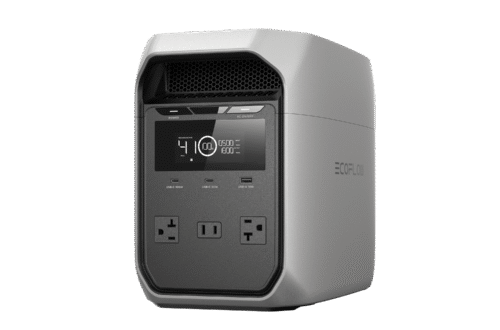
The EcoFlow DELTA 3 hits a sweet spot that most people shopping for hurricane prep actually need. It takes this spot from the EcoFlow Delta 2, which is out of stock, and keeps the same 1024Wh capacity and 1800W AC output, so the same math holds: enough to run a full-size refrigerator for roughly 6–8 hours of actual compressor run time, keep multiple devices charged, and power a CPAP through the night, all from a single charge. EcoFlow lists it at about 27.6 lbs, so you can still move it around the house with one hand.
What earns it the overall crown is the combination of fast charging and solid output. EcoFlow’s listing says the DELTA 3 reaches a full charge in 56 minutes when its 1500W maximum AC input is combined with 500W of solar, and 80 percent in about 30 minutes. That matters a lot in the hours before a storm makes landfall: you can top it off quickly even if you only have a short window before power flickers out. It accepts up to 500W of solar input, which means on a clear post-storm day with two 200W panels, you can significantly replenish the battery before afternoon. The LiFePO4 cells are rated for 4,000 cycles to 80 percent, and EcoFlow says it can run 13 devices at once and expand to 5kWh with extra battery packs.
The 1800W continuous AC output handles most household appliances you’d want to run in an emergency – refrigerator, box fan, phone chargers, a small TV. The surge capacity is even higher, which handles compressor startup without issue. LFP chemistry means you’re not worried about it sitting in a hot garage for six months until you need it, and EcoFlow rates it for 3,000 charge cycles.
For most Gulf Coast households running through a 2–3 day outage – especially if you pair it with even a single solar panel – the DELTA 3 is the right call. It’s not the cheapest option, but it delivers real capability at a price that doesn’t require a second mortgage.
Read our EcoFlow Delta 2 review (the DELTA 3’s out-of-stock predecessor) |
Budget Pick – Jackery Explorer 300
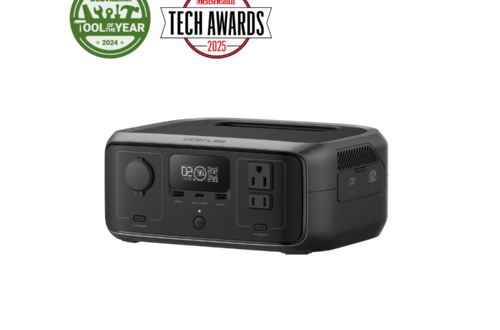
Not everyone needs to run a refrigerator. If you’re in an apartment, have a small household, or you’re buying a solar generator specifically as a portable emergency kit to keep phones charged, run a CPAP overnight, and keep a small light going, the Jackery Explorer 300 is the lightest serious option on this list. (The Explorer 300 Plus this guide used to recommend is no longer sold on Amazon; the Explorer 300 is the current small Jackery.)
292Wh isn’t going to run your fridge. Let’s be upfront about that. But it will recharge a phone well over a dozen times, keep a small CPAP running overnight with the humidifier off, power a USB fan for hours, and keep your communications gear alive. At about 7.5 lbs it goes anywhere: in a go-bag, in the car, on a camping cot in the living room during a shelter-in-place.
The 300W AC output (600W surge) is genuinely useful for small loads: a laptop, a small LED TV, phone chargers, a router, a desk fan. Two AC outlets and a 100W USB-C port mean you aren’t reaching for a power strip. Anything with a compressor or a big startup surge, window AC units, refrigerators, microwaves, is off the table.
For budget-conscious preppers, families buying a second unit to complement a larger generator, or anyone who wants something highly portable for storm evacuations, the Explorer 300 punches above its size. Jackery’s current listing states it uses LiFePO4 cells rated for more than 4,000 cycles, it recharges from the wall, the car or a 100W panel, and Jackery’s build quality is solid.
Read our full Jackery Explorer 300 review |
Best Mid-Range – Jackery Explorer 1000 v2
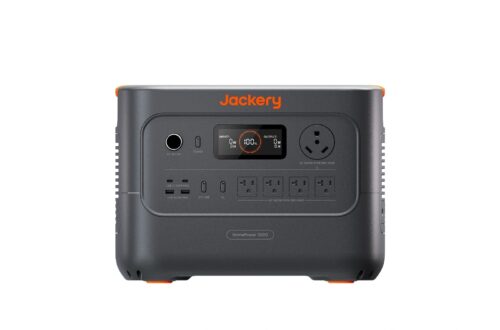
The Jackery Explorer 1000 v2 sits in a genuinely competitive spot: 1070Wh of capacity, 1500W AC output, and only 23.8 lbs. That weight figure is notable. You get close to the same capacity as the EcoFlow DELTA 3 in a lighter package, and Jackery has built a strong reputation for reliability over years of real-world use.
For a 2-day hurricane outage, the Explorer 1000 v2 is a capable unit. Run your refrigerator overnight (estimating 8–10 hours of compressor cycling), charge your devices throughout the day, run a box fan, and keep the router on – you’re looking at a full day of comfortable-ish emergency power before you need to think about recharging. Pair it with a 200W solar panel and you’re extending that significantly on sunny post-storm days.
The 1500W AC output is solid for most emergency loads. The main scenario where you might feel the ceiling is if you’re trying to run a larger refrigerator with a high startup surge – the Explorer 1000 v2 handles most, but a large chest freezer’s compressor startup might give it trouble. For a standard kitchen fridge or apartment-size unit, you’re fine.
Where the Explorer 1000 v2 wins versus the DELTA 3 is portability and brand reliability for first-time solar generator buyers. Jackery’s app, customer support, and straightforward interface are consistently well-reviewed. If you want something you can share with less tech-savvy family members and know they’ll figure it out quickly under stress, the Jackery is that unit.
It is priced competitively for its class, and Jackery regularly runs sales that bring it down further. Watch for deals in the weeks before peak hurricane season.
Read our full Jackery Explorer 1000 v2 review |
Our Pick for Extended Outages – Anker SOLIX F3000
This is the unit to build around if outages at your address run past 48 hours. The Anker SOLIX F3000 pairs a 3,072Wh LFP battery with 3,600W of continuous AC output and a 7,200W surge rating, and that combination changes what “running the house” means on day four of an outage.
It means the refrigerator stays on. It means the CPAP runs all night without any mental math about whether there is enough left come morning. It means the modem and router stay live so you can follow National Hurricane Center updates and reach family. It means a window air conditioner is a realistic load rather than a fantasy, and there is still power left over to charge the neighbors’ phones.
The 3,600W continuous output is the real differentiator at this capacity. Four 20-amp household outlets carry up to 2,400W together, and the full 3,600W comes through a 30-amp TT-30R outlet, the same plug an RV uses, which is the one to pair with a transfer cord or a heavy appliance. Refrigerators with aggressive startup surges, small power tools for post-storm cleanup, and several loads at once are all inside its envelope.
Recharging is where it pulls away from everything else here. Two solar inputs accept up to 2,400W of panels, which on a clear Florida day means meaningful recharging even while you are drawing power. Plug a 120V gas generator into its charging input and it takes 3,600W, refilling the battery in a little over an hour so the generator can be shut off for the rest of the day. From a 20-amp wall circuit it refills in about two hours. Anker rates the LFP pack for 4,000 cycles.
Yes, it weighs 91.5 lbs. That is the trade-off for this class. It rolls on built-in wheels with a telescoping handle, so moving it across a garage is a one-person job; lifting it into a truck bed is not. It is a one-time placement decision, not a daily inconvenience.
It is an investment. But if you are on the Gulf Coast with a family, medical equipment, or a chest freezer full of food you cannot afford to lose, the math gets clear quickly. This is the unit we recommend for anyone planning for outages longer than 48 hours.
Read our full Anker SOLIX F3000 review |
Best High-Capacity – Bluetti Elite 200 v2
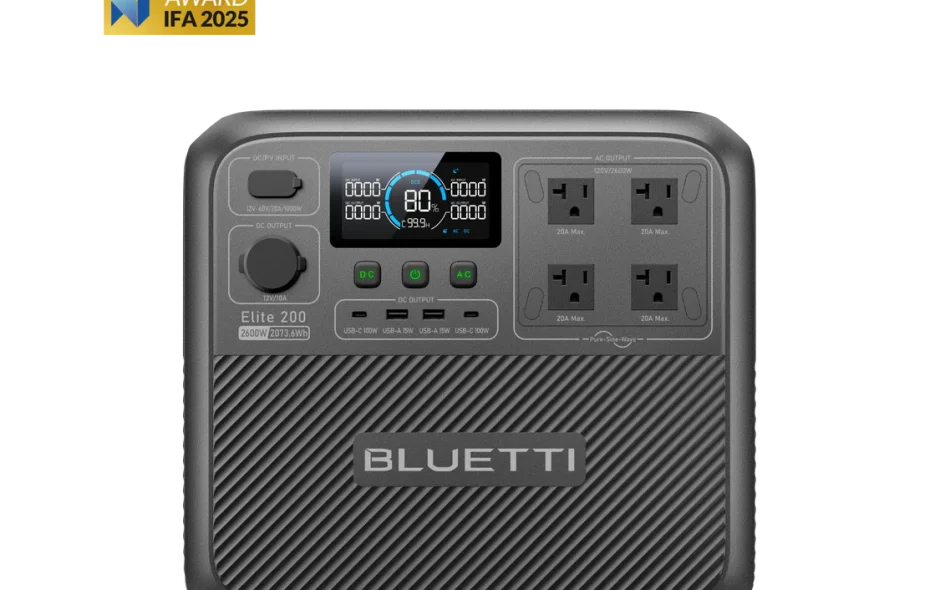
The Bluetti Elite 200 v2 deserves serious attention from anyone who wants 2000Wh-class power without stepping up to the SOLIX F3000’s size and cost. With 2073Wh of LFP capacity and 2600W of continuous AC output, it is the most capable unit here below the F3000.
On paper the F3000 is the bigger machine by a wide margin. In practice, for a typical two- to four-day outage, the Bluetti covers most of the same loads, and the choice comes down to how long your outages run, ecosystem preference, and which one you can get your hands on fastest before a storm. The Bluetti Elite 200 v2 is a genuinely capable machine that we would trust to run a fridge, a CPAP, device charging, and a box fan through a multi-day outage without hesitation.
The 2600W AC output is second only to the F3000 on this list, which gives it plenty of headroom for high-surge appliances and running multiple loads at once. If you have a larger chest freezer or a window AC unit you absolutely need to run, the Bluetti’s output ceiling gives you the best chance of handling it.
Bluetti has also built strong expandability into the Elite 200 v2, allowing for external battery modules to add capacity if you anticipate truly extended outages. For most hurricane scenarios that’s not necessary, but it’s a nice option for peace of mind.
Where the F3000 pulls clearly ahead is recharging: 2,400W of solar input and 3,600W of generator pass-through against the Bluetti’s lower ceilings, so check current configurations before buying if recharge speed is your priority. But for sheer value per watt-hour in the 2000Wh class, the Bluetti Elite 200 v2 is hard to beat.
Read our full Bluetti Elite 200 v2 review |
Frequently Asked Questions
Can a solar generator really run my refrigerator during a hurricane?
Yes – but with important caveats. A standard kitchen refrigerator draws roughly 100–200W on average, but the compressor startup surge can hit 800–1,200W or more. You need a solar generator with a continuous AC output above that surge threshold. The EcoFlow DELTA 3, Jackery Explorer 1000 v2, Anker SOLIX F3000, and Bluetti Elite 200 v2 all meet that bar. The Jackery Explorer 300 does not – it’s not designed for compressor loads. Also remember that your refrigerator will drain the battery over time. A 1000Wh unit might run a fridge for 6–10 hours without recharging. The 2000Wh-class units double that window and benefit most from solar top-offs during the day.
How much solar panel wattage do I need to keep these charged?
As a rule of thumb, match your solar input to your expected daily consumption. If you’re drawing 500Wh per day running a fridge and devices, two 200W panels in good Florida sun (4–5 peak sun hours) can realistically deliver 400–800Wh per day depending on weather and panel angle. For the 2000Wh-class units, a 400–600W panel array is practical for real replenishment. Cloudy post-storm skies will reduce this significantly – that’s why having a fully charged unit going into a storm is still your most important prep step.
Are these safe to use indoors?
Yes. This is one of the biggest advantages solar generators have over gas generators. There are no fumes, no combustion, no carbon monoxide risk. You can run them in your living room, bedroom, or garage with the door closed. Gas generators must be run outdoors with significant clearance from windows and doors. During a hurricane when you can’t safely step outside, that distinction matters enormously.
How do I prep my solar generator before a storm hits?
Charge it to 100% from the wall outlet the day before the storm – don’t rely on solar during cloudy pre-storm conditions. Position your solar panels somewhere safe that you can deploy quickly once the storm passes. Keep extension cords organized and ready. Know in advance what you’re going to power and in what order so you’re not making those decisions under stress. If you have a battery-expandable unit, make sure expansion batteries are also fully charged.
Is LFP chemistry really worth it for hurricane prep specifically?
Yes, for two reasons that matter specifically for Gulf Coast use. First, LFP batteries handle heat significantly better than NMC lithium. When you’re storing a unit in a garage in Florida that regularly hits 90°F+, that thermal stability is not academic. Second, LFP chemistry maintains capacity better across long storage periods. If your unit sits mostly idle for 10 months between storm seasons, LFP will hold up better than older chemistry. All five units on this list use LFP – it’s now the standard in quality solar generators, and it’s the right call for this use case.
Bottom Line
Here’s the honest summary: your best solar generator for hurricane season is the most capacity you can realistically afford and move around. For most households on the Gulf Coast, that means the EcoFlow DELTA 3 if you’re budget-conscious and expecting 2–3 day outages, or the Anker SOLIX F3000 if you have medical equipment, a full household to power, or you’ve been through a multi-week outage and know what that actually feels like. The Bluetti Elite 200 v2 is the alternative pick if you want 2000Wh-class power at a slightly lower price point. The Jackery Explorer 1000 v2 is the sweet spot for someone who wants solid mid-range performance in a lighter package. And the Jackery Explorer 300 is the right answer for budget preppers, renters, and evacuation kit builds. Buy it before June. Charge it in August. Don’t wait for the cone to show up over your county.
Updated 2026-10-31: clarified that this is a research-based review.
Updated 2026-11-11: the EcoFlow Delta 2 was out of stock on Amazon, so the Best Overall pick is now its successor, the EcoFlow DELTA 3 (same 1024Wh capacity and 1800W output, described from its listing).
Some links on this page are Amazon affiliate links. If you buy through them, Ultimate Prepper’s Guide may earn a small commission at no extra cost to you.