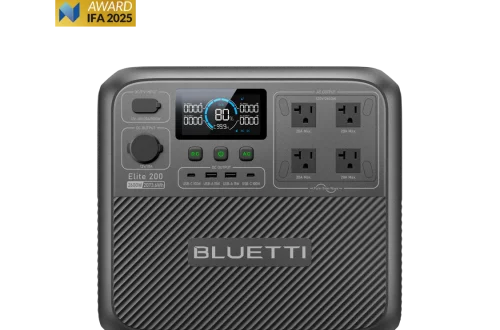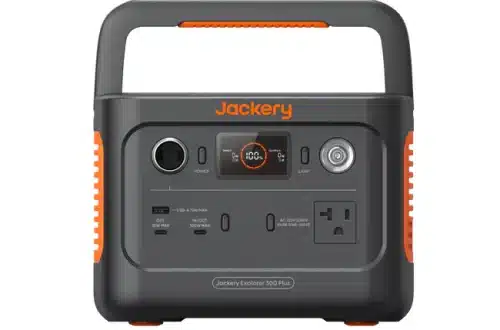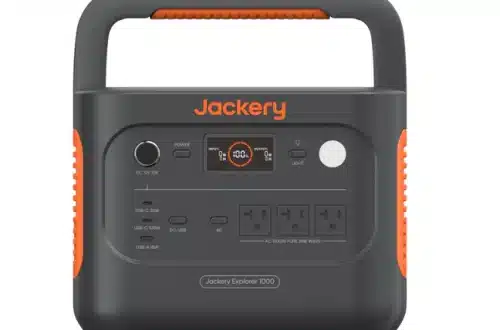
A three-day power outage after a hurricane is exactly the situation where you realize a folding solar panel isn’t a luxury – it’s just a smarter way to keep your phone, lights, and small appliances running when the grid is gone. The Renogy 200W Portable Foldable Solar Panel is one of the more capable options at this price point, and it’s worth a hard look if you’re serious about solar backup.
What It Does
The Renogy 200W foldable panel uses high-efficiency monocrystalline solar cells arranged in a suitcase-style enclosure. You unfold it, prop it up with the built-in kickstands, point it at the sun, and it starts pushing power out through its output ports. It’s designed to charge 12V batteries directly or feed into a portable power station or solar generator – whatever you’re running as your storage bank. At 200 watts, it’s putting out real usable power, not the trickle you get from smaller panels.
The kickstands let you dial in the angle so you’re not just laying it flat on the ground and losing efficiency. The carry handle and folded profile make it genuinely portable – not “portable” in the marketing sense where they mean technically movable. You can actually pick this thing up and walk with it, toss it in a truck bed, or store it in a closet between uses without it taking over the room.
Why It Belongs in Your Kit
Down here on the Gulf Coast, hurricane season runs June through November and power outages can stretch for days or weeks after a major storm. I’ve had this panel paired with a portable power station for two hurricane seasons now, and the combination has kept phones charged, a fan running overnight, and a mini fridge cold during some extended outages. That’s not a small thing when it’s 90 degrees and humid and you’re waiting on the utility crews to work through your neighborhood.
For camping and overlanding use, 200 watts is enough to meaningfully top off a power station during a full day of sun – which means you’re not rationing power the way you would with a smaller 100W panel. If you’re running a CPAP machine, keeping camera batteries charged, or just want to run lights and a fan at a campsite without worrying about it, this panel gives you enough headroom to actually relax.
It also works as a semi-permanent off-grid setup if you’re at a cabin or remote property. Prop it out, run the cable inside, done. The waterproof construction handles rain and morning dew without issue, so you don’t have to babysit it every time clouds roll in.
Honest Limitations
Real-world output is always lower than the rated wattage. On a clear day with optimal angle, you’ll get close to 200W – but partial cloud cover, a non-ideal angle, or heat buildup on the cells will bring that number down. Budget your expectations accordingly if you’re trying to run power calculations for an off-grid setup.
It needs a separate charge controller or a power station with built-in MPPT to actually use it safely with a battery bank. If you’re new to solar, that’s an additional purchase and a small learning curve – the panel itself doesn’t come with everything you need to run a complete system.
It’s not ultralight. The folded suitcase design is convenient, but this thing has real weight to it. Fine for a truck, an RV, or a base camp – less ideal if you’re trying to keep your backpacking kit lean.
How It Stacks Up
Jackery’s SolarSaga 200W is a direct competitor and worth considering if you’re already in the Jackery ecosystem – it integrates cleanly with their Explorer power stations and the build quality is solid. The tradeoff is price: Jackery tends to run higher, and if you’re not committed to their power station lineup, you’re paying for ecosystem compatibility you might not need. The Renogy panel works with any power station that accepts solar input, which gives you more flexibility.
Goal Zero’s Nomad 200 is another option, built well and foldable, but again priced at a premium for the brand. If budget matters and you don’t have a strong reason to go with one of those brands, the Renogy delivers comparable performance for less money. Check current price on Amazon to see where it’s sitting – it does go on sale periodically.
Who Should Buy This
If you’re in hurricane country, live somewhere with frequent grid outages, or spend time camping and overlanding and want real solar charging capability, this panel makes a lot of sense. It’s also a strong pick for RV owners who want a portable option they can deploy at a site without a permanent roof install.
If you’re looking for something to toss in a bug-out bag or backpack, this isn’t your panel – the weight and folded size make it a truck-and-campsite product, not a hiking product. And if you’re hoping to run a full household off a single 200W panel, you’ll need to reset expectations; this is a charging and small-appliance solution, not a whole-home backup.
Common Questions
Does it work with any portable power station?
Generally yes, as long as your power station accepts solar input and the panel’s voltage falls within the station’s input range. Check your power station’s specs for max solar input voltage and wattage before connecting – most modern power stations in the 500Wh–1500Wh range handle this panel fine, but it’s worth confirming.
Do I need a separate charge controller?
If you’re running it into a portable power station with built-in MPPT (most modern ones do), no. If you’re connecting directly to a bare 12V battery bank, yes – you’ll need an external charge controller to regulate the charge and protect the battery.
How long to charge a typical power station?
It depends on the station’s capacity and real-world panel output. On a clear day with good sun angle, a 500Wh power station could realistically charge in 3–4 hours. Larger banks take proportionally longer, and cloud cover will stretch those times out. Think of it as a full-day charging scenario for anything over 1000Wh.
Is it actually waterproof?
The cells and enclosure are rated to handle rain and moisture – leaving it out during a passing shower isn’t going to damage it. That said, it’s not designed for submersion, and you should still protect the cable connectors from pooling water. In a storm, bring it in.
Bottom Line
The Renogy 200W Portable Foldable Solar Panel is a capable, practical solar charging solution for anyone who needs real off-grid power without a permanent installation. It’s not the cheapest panel on the market, but it punches at its price point with solid efficiency and a design that actually works in the field. View on Amazon and pair it with a quality power station and you’ve got a legitimate backup power setup.
Some links on this page are Amazon affiliate links. I only recommend gear I personally own – if you buy through my link, I may earn a small commission at no extra cost to you.