General information only, not medical advice or first aid training. Follow the product label, get hands-on training, and in an emergency call your local emergency number.
Medical preparedness is the part of hurricane planning most households get backwards. They buy a trauma kit they have never trained with and forget that the pharmacy will be closed for a week. They stock a tourniquet and run out of blood pressure pills on day four. The storm itself is a few hours. The medical problem is the ten days after, when the roads are blocked, the power is out, urgent care is dark, and whatever you did not plan for becomes the thing you are dealing with.
This guide lays out medical preparedness as layers, from the everyday kit you will open most often up to the trauma kit you hope never to open, then covers the parts that are not kits at all: prescriptions and insulin in an outage, training, sanitation and hygiene, insect protection, and the narrow case for potassium iodide. It links every medical review on this site where it belongs in the plan. It is not medical advice; where a figure or rule comes from an agency, the agency is cited and the limits are stated. This guide is one chapter of our Hurricane Preparedness Hub, and the hurricane kit checklist puts the items below on a single list.
Layer One: The Everyday First Aid Kit
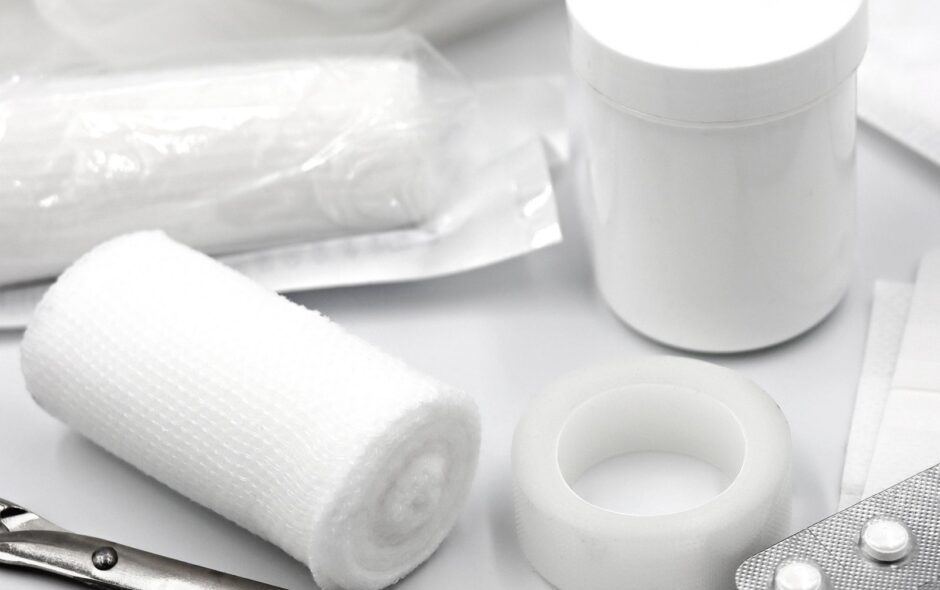
The first layer handles the injuries that actually happen: cuts, burns, blisters, sprains, a headache, an upset stomach. Ready.gov lists a first aid kit among the basic emergency supplies, alongside non-prescription medications “such as pain relievers, anti-diarrhea medication, antacids or laxatives.” This is the kit you will open during a storm week, often several times, and it should be stocked for a household rather than a day hike.
Our first aid kits roundup matches three kits to three scenarios. For the home and the vehicle, the SurviveX Large First Aid Kit is the pick: 250 pieces in color-coded compartments, with wound closure strips, burn care and a thermometer. For a pack or an evacuation bag, the Adventure Medical Kits Ultralight .9 is the waterproof lightweight option. Round out either kit with the over-the-counter medicines Ready.gov names; the 37-packet travel medicine kit we reviewed carries individually wrapped packets of common remedies without a shelf of bottles. The BleedStop first aid powder belongs here too, for the minor cuts of cleanup; our review is clear that it is not a trauma product.
Layer Two: The Trauma Kit
The second layer exists for the injuries that kill in minutes. The Department of Homeland Security states the problem plainly: a person who is bleeding can die from blood loss within five minutes. After a hurricane that bleeding comes from chainsaws, sheet metal, glass, nail guns and falls, worked by exhausted people with no ambulance nearby. The American College of Surgeons’ Stop the Bleed course teaches three responses: direct pressure, packing a wound, and applying a tourniquet. The trauma kit is the set of items that makes those three possible.
Our guide to building a Stop-the-Bleed kit walks through the contents, the order of priority, and how many kits a household needs. The components we review individually are the SOF Tactical Tourniquet, a windlass tourniquet of the type on the military’s CoTCCC recommended list; the Israeli-style pressure bandage, which holds pressure on a packed wound after your hands have to move; and the NAR HyFin Vent Chest Seal, a trained-user item for penetrating chest wounds that the basic class does not cover. For one purchase instead of six, the North American Rescue Eagle IFAK bundles a genuine tourniquet, a trauma dressing, chest seals, an airway and gloves in one pouch.
One rule governs this layer: the gear is incomplete without the class. Learn to use each item in a hands-on course such as Stop the Bleed or American Red Cross first aid, follow the maker’s instructions, and remember that none of it replaces calling for help.
Medications and Prescriptions in a Hurricane
This is the layer most likely to matter and least likely to be planned. Ready.gov notes that “about half of all Americans take a prescription medicine every day” and that an emergency “can make it difficult for them to refill their prescription or to find an open pharmacy.” It tells evacuees to include medication in the go bag or car trunk and warns that supplies may be unavailable “for days or even weeks after a hurricane.”
How much to keep on hand. The CDC’s hurricane guidance speaks of “a week’s supply of medication” and tells people who evacuate to take their prescription medicines with them. If your household is planning for a longer outage, ask your doctor or pharmacist how large an emergency supply you can keep. The CDC’s advice is to “talk to your doctor or pharmacist about how you can create an emergency supply of medicines,” and it notes that pharmacies “can dispense early refills of some prescription medicines when there’s an emergency declaration.” Early-refill rules vary by state, by insurer and by medicine. This is not legal advice: ask your pharmacist what your state and your plan allow, before hurricane season rather than during a watch.
Keep the paperwork. The CDC recommends a written list of your prescription medicines including “your diagnosis, dosage, frequency, medical supply needs, and allergies.” Put a copy in the kit and the vehicle and a photo on each adult’s phone; that list is what gets a prescription transferred at a pharmacy three counties away. Ready.gov’s kit list also includes “prescription eyeglasses and contact lens solution.”
Heat and refrigerated medicines. Insulin is the case that comes up most. The FDA’s page Information Regarding Insulin Storage and Switching Between Products in an Emergency sets out how insulin should be stored and how long it can go unrefrigerated, says not to use insulin that has been frozen, and says that under emergency conditions you might still need to use insulin that has been stored above the recommended temperature. Follow your own product’s package insert, and ask your pharmacist or prescriber about your insulin. The CDC’s Managing Insulin in an Emergency adds: keep insulin cool but never frozen, keep it away from direct heat and sunlight, and once you are back to your routine, throw away insulin that was stored at room temperature or at very high or low temperatures. Ready.gov’s power-outage page says to “have alternate plans for refrigerating medicines or using power-dependent medical devices,” to talk to a medical provider about a power outage plan, and to find out how long each medication can be stored at higher temperatures. It also says when to discard refrigerated medicine after a long outage, unless the drug’s label says otherwise, and to consult your doctor or pharmacist right away for a new supply. In practice that means a cooler and chemical ice packs in the kit, which the CDC lists, and a power plan for the refrigerator and any medical device such as a CPAP or oxygen concentrator. Our hurricane power outage checklist covers how to budget that power.
Training: The Layer That Makes the Others Work
Stop the Bleed. The American College of Surgeons course gives hands-on practice in applying direct pressure, packing a wound, and using a tourniquet. Most ACS courses last no longer than 90 minutes, there is typically no charge, and anyone can take one. Find a class through stopthebleed.org or the ACS course search at cms.bleedingcontrol.org/class/search. Take it before relying on a trauma kit.
CPR and basic first aid. The American Heart Association and the American Red Cross both run certified courses in most communities, many in a single evening.
Wilderness First Aid. A weekend course built around the assumption that definitive care is hours away, which is exactly what a hurricane creates in a suburb. The first aid roundup names the organizations that run them.
A reference book is the fourth item. The Survival Medicine Handbook is the one we reviewed; it complements training rather than replacing it, and paper keeps working when the phones do not.
Sanitation and Hygiene When the Water Is Off
The unglamorous layer prevents the most illness. Ready.gov’s kit list includes “soap, hand sanitizer and disinfecting wipes,” “moist towelettes, garbage bags and plastic ties (for personal sanitation),” and “feminine supplies and personal hygiene items.” The CDC’s after-disaster guidance is to wash hands often with soap and clean water, especially before preparing food, before eating, after using the toilet and after cleaning, because dirty water after a storm can make people sick. Its general handwashing advice is to scrub for at least 20 seconds and, only when soap and water are not available, to use a hand sanitizer with at least 60 percent alcohol, never on visibly dirty or greasy hands.
Floodwater is the specific hazard. The CDC says to avoid floodwater if you have an open wound, to wash any wound well with soap and clean water, and to cover clean open wounds with a waterproof bandage; after a puncture wound or a wound contaminated with feces, soil or saliva, a health care professional should decide whether a tetanus booster is needed. Redness, swelling or oozing means seek care right away. The water side, including boil notices and filters, is in our post-storm water safety guide and the water storage guide.
Three products carry most of this layer. A portable folding toilet with bags and a gelling agent solves the problem that arrives the first morning the water main is dry. Toothpaste tablets keep oral hygiene going on a few sips of water. A gravity shower bag turns five gallons of stored water into a wash after a day of hauling debris in the heat. Add garbage bags, bleach for surfaces, and a hand-washing station (a jug with a spigot, soap and a catch basin) by the door everyone uses.
Insect Protection
Mosquitoes are a medical problem on the Gulf Coast after a storm. The CDC says an increase in floodwater mosquitoes is expected in the weeks after flooding, that nuisance mosquitoes generally do not spread viruses, but that the types that can spread viruses may increase about two weeks after a hurricane, including in areas that did not flood but got more rain than usual. Its advice is insect repellent, proper clothing, window and door screens installed or repaired, and, once a week, emptying and scrubbing, turning over, covering or throwing out anything that holds water. The CDC’s bite-prevention page says to use an EPA-registered repellent with one of these active ingredients: DEET, picaridin, IR3535, oil of lemon eucalyptus, para-menthane-diol or 2-undecanone, and to wear loose-fitting, long-sleeved shirts and pants.
Skin repellent is the baseline. For the yard or an open deck, a spatial repeller adds a protected zone with no power needed, used only where its label permits, and nobody should settle in near a running generator’s exhaust; our Thermacell Fuel-ZoneGuard review covers what it protects and its limits, including that it is for outdoor use and does not replace repellent on skin once you leave the zone.
Potassium Iodide: Follow Public-Health Instructions
Potassium iodide (KI) appears on prepper lists far more often than it belongs there. The FDA says KI blocks the thyroid’s uptake of radioactive iodine, protects the thyroid only, “is not a general radioprotective agent,” and does nothing against other radioactive materials or external radiation. Local public health or emergency management officials will tell the public if there is a need to take it; it “should not be taken as a preventative before radiation exposure,” and people with known iodine sensitivity should avoid it. How much to take, and for how long, comes from the product label and from those officials, not from this guide; the FDA’s Frequently Asked Questions on Potassium Iodide (KI) and the CDC’s Potassium Iodide (KI) page explain the details. FDA-approved products available without a prescription include iOSAT and ThyroSafe tablets and a potassium iodide oral solution.
None of that applies to a hurricane. It applies to a household within the emergency planning zone of a nuclear plant, where state plans may recommend KI. If that describes you, our iOSAT potassium iodide review covers the FDA-approved tablet and why it stays sealed until officials say otherwise. If it does not, spend the money on the Stop the Bleed class.
A Household Medical Checklist
| Layer | Have before June | Check before a storm |
|---|---|---|
| Everyday first aid | Home kit, vehicle or pack kit, OTC medicines (pain relievers, anti-diarrhea, antacids), minor-cut clotting powder | Expired items replaced; kit restocked after last use |
| Trauma | Tourniquet, pressure bandage, hemostatic and plain gauze, gloves, shears, marker; chest seals if trained | Dates on every sealed item; tourniquet inspected for sun and wear |
| Medications | A week’s supply of each prescription (more if your doctor, pharmacist and plan allow), written medication list with dosages and allergies, spare glasses, cooler and ice packs | Refills requested at the watch, not the warning; list photographed; insulin storage plan confirmed |
| Powered devices | Power station or generator sized for CPAP, oxygen or nebulizer; utility medical-needs registration | Batteries charged; fuel on hand; device cables with the device |
| Training | Stop the Bleed, CPR, and ideally Wilderness First Aid for at least one adult | Refresher video watched; who-does-what agreed |
| Sanitation | Portable toilet with bags, soap, sanitizer with at least 60 percent alcohol, garbage bags, bleach, toothpaste tablets, shower bag | Hand-washing station set up; waterproof bandages in the kit |
| Insects | EPA-registered skin repellent, screens repaired, spatial repeller and fuel for the porch | Standing water emptied; repellent in the go bag |
| Potassium iodide | Only inside a nuclear plant emergency planning zone, per state plan | Sealed; taken only if officials say so |
Common Questions
How many days of prescription medicine should I keep for a hurricane?
The CDC’s hurricane guidance refers to a week’s supply and warns that pharmacies may be closed during and after a hurricane; how much more than a week to keep is a question for your doctor or pharmacist. Whether you can build that buffer depends on your state’s emergency refill rules and your insurer, so ask your pharmacist now.
Do I need a trauma kit if I have a good first aid kit?
They solve different problems. A first aid kit handles the common injuries; a trauma kit holds the gear for bleeding that can kill in minutes, which the Stop the Bleed course teaches you to control. A household that will be running chainsaws after a storm should have both and should have taken the Stop the Bleed class. The Stop-the-Bleed kit guide covers the contents.
Should a prepper keep potassium iodide?
Only if your state or local emergency plan includes it; the FDA notes that the Nuclear Regulatory Commission supplies KI to states that request it for people within the 10-mile emergency planning zone of a nuclear power plant. Follow that plan and CDC guidance rather than treating distance from a plant as the only test. The FDA and the CDC are explicit that KI protects only the thyroid against radioactive iodine and should be taken only when public health or emergency officials instruct it; those officials set the timing. For a hurricane it has no role.
Bottom Line
Build the medical plan in the order the risks arrive. Start with a stocked everyday kit and the over-the-counter medicines from the first aid kits roundup. Sort out prescriptions, a written medication list and a cold-storage plan before the season, because that is the layer that fails most households. Take the Stop the Bleed class, then build the trauma kit from our Stop-the-Bleed kit guide. Stock the sanitation and insect layer. Put all of it on the hurricane kit checklist, and read the rest of the Hurricane Preparedness Hub for power, water, food and communications.
Sources
- Ready.gov: Build A Kit
- Ready.gov: Power Outages
- Ready.gov: Hurricanes
- CDC: Prescriptions (Prepare Your Health)
- CDC: Hurricanes and Prescription Medications
- FDA: Information Regarding Insulin Storage and Switching Between Products in an Emergency
- CDC: Managing Insulin in an Emergency
- ACS Stop the Bleed: FAQ
- DHS: Stop the Bleed
- CDC: Handwashing After a Disaster
- CDC: About Handwashing
- CDC: Hand Sanitizer Guidelines and Recommendations
- CDC: Safety Guidelines: Floodwater
- CDC: What to Do After a Hurricane or Flood (mosquitoes)
- CDC: Preventing Mosquito Bites
- FDA: Frequently Asked Questions on Potassium Iodide (KI)
- CDC: Potassium Iodide (KI)
Updated 2026-11-17: medicine storage figures and potassium iodide dose details now defer to the label, a pharmacist and the FDA and CDC; our own 14-day supply target and an unsourced statistic removed; handwashing, tetanus and mosquito advice aligned with the CDC; the SurviveX kit is the maker’s 250 pieces, and the spatial repeller goes in the yard or on an open deck, not a porch.
Some links on this page are Amazon affiliate links. If you buy through them, Ultimate Prepper’s Guide may earn a small commission at no extra cost to you.