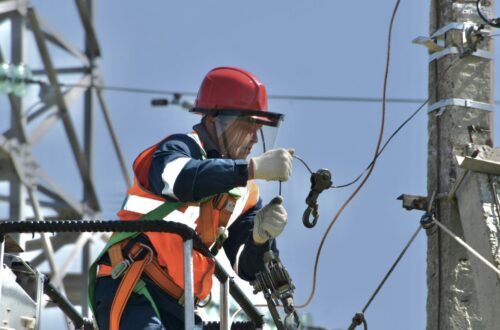
The grid on the Gulf Coast fails in a particular way. A hurricane does not flicker the lights for an hour; it takes a county dark for three days, a week, sometimes longer, in the hottest part of the year, with the refrigerator full and the roads too flooded for a run to the store. Every other part of a hurricane plan leans on electricity somewhere: the food in the freezer, the phones that carry the alerts, the fan that makes sleep possible, the medical equipment on the nightstand. Backup power is the piece that keeps the rest of the plan standing.
There are two ways to make that power at home: burn fuel in a generator, or store it ahead of time in a battery power station. They are not rivals so much as two different tools, and most households end up wanting one of each. This guide explains how each works, where fuel beats battery and where it does not, how to do the runtime math on a napkin, what the safety rules actually say, and which to buy first. It also maps every review and roundup in our Power category, and it sits under our hurricane preparedness hub alongside the water, food and communications guides.
How a Generator Makes Power
A portable generator is a small engine turning an alternator. Pour in gasoline, or connect propane or natural gas on a multi-fuel model, start it, and it produces 120 volt power for as long as the fuel lasts. Open-frame conventional generators are the cheapest watts you can buy and the loudest. Inverter generators add electronics that clean up the output for sensitive devices and throttle the engine down when the load is light, which makes them quieter and more fuel-efficient. Our Firman T09275 tri-fuel review covers a large open-frame unit that runs on gasoline, propane or natural gas, and our Champion 4500W dual fuel inverter review covers a mid-size inverter that burns gasoline or propane.
The advantages are simple. A generator’s output does not run down; it refuels. A can of gasoline or a propane cylinder stores far more energy than any battery you can lift, and a tri-fuel unit connected to a natural gas line has no tank to empty at all. The disadvantages are just as simple: it must run outdoors, it is loud, it needs fuel you have to store and rotate, and it produces carbon monoxide every minute it runs.
How a Power Station Stores and Delivers Power
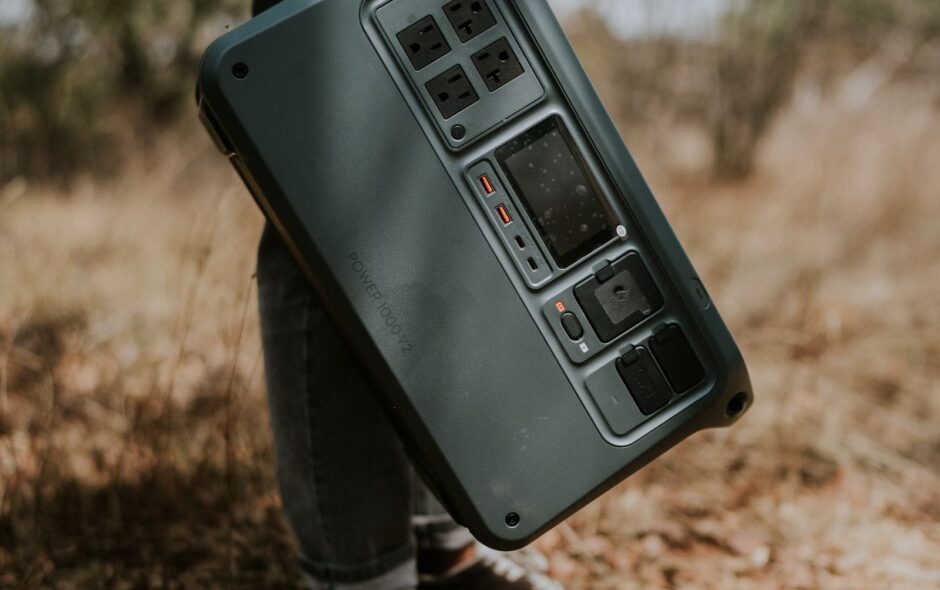
A portable power station is a lithium battery, an inverter that turns its direct current into household alternating current, and a panel of outlets, all in one box. Everything it gives you during the outage was put into it beforehand, from a wall outlet, a car, a solar panel, or a generator. Current units use lithium iron phosphate (LFP) cells, which tolerate heat better than older lithium chemistries and are rated by their makers for thousands of charge cycles, so a station that lives in a Florida garage and sees a few storms a year will outlast most of the appliances it powers.
What a battery gives up in total energy it makes up in where you can use it. A power station runs silently in the bedroom, in a house shut tight against the storm, next to a sleeping child, with no exhaust and no fuel. It switches on in milliseconds when the grid drops, which matters for a CPAP or a refrigerator. And it recharges from the sun, which a generator cannot. Our solar generator roundup compares the main sizes side by side.
Fuel vs Battery: Where Each One Wins
Think of the generator as the well and the power station as the bucket. The generator produces large amounts of energy on demand but cannot be used inside the house and should not run more than it has to. The power station carries energy into the house quietly and safely but holds a fixed amount. The two together are better than either alone: run the generator outdoors for an hour or two to refill the station and chill the refrigerator, shut it down, and let the battery carry the house in silence overnight. That routine burns a fraction of the fuel, cuts the hours the engine is making carbon monoxide, and keeps the noise down for you and the neighbors.
If you can own only one, the decision comes down to loads and location. A household that must keep a full-size refrigerator, a window air conditioner and a well pump running for days needs the energy density of fuel; no portable battery stores that much, and the grid is not there to recharge it. A household in an apartment or townhouse with no safe outdoor spot 20 feet from every window and door cannot run a generator at all, and a power station is the only honest choice. Everyone in between should start with the battery, because it is useful in every outage, and add a generator when the load list demands it.
| Question | Fuel generator | Battery power station |
|---|---|---|
| Where it can run | Outdoors only, more than 20 feet from windows, doors and vents (CDC) | Indoors, within the manufacturer’s placement and temperature limits |
| How long it runs | As long as the fuel supply lasts | Until the battery is empty, then it needs a source to recharge |
| Noise | Engine noise; inverter models are quieter at light loads | Near silent; a cooling fan on larger units under heavy load |
| Carbon monoxide | Always, whenever the engine runs | None |
| Running during the storm | No; it must stay dry and nobody should be outside | Yes |
| Recharging after the storm | Needs more fuel | Wall, car, solar panels, or a generator |
| Heavy loads (well pump, window AC) | Yes, if sized for the starting surge | Only the largest stations, and for hours, not days |
| Upkeep | Oil, fuel stabilizer, a monthly test run, fuel stored in a labeled container outside living areas (NFPA) | Top up the charge every few months |
Runtime Math at a Glance
Two numbers describe any backup source. Watts is how much it can deliver at once; watt-hours is how much it holds. An appliance’s label gives its watts. Divide a station’s rated watt-hours by the appliance’s watts, take off roughly 15 percent for the inverter’s own losses, and you have a rough runtime in hours. A refrigerator complicates the sum because its compressor cycles on and off, so the average draw over a day is well below the label figure; our power outage checklist walks through measuring that with a plug-in meter before the season starts.
The table shows what that arithmetic gives for three current stations we review, using each maker’s rated capacity and two example loads. These are estimates from the rated capacity, not runtime claims by the manufacturers, and real results depend on the appliance, the heat and how the station is managed. Jackery’s own figure for the HomePower 3000 is one to two days on a refrigerator, and Anker rates the SOLIX F3000, which has the same capacity, at about 42 hours on a 190 watt refrigerator.
| Station | Rated capacity | Rated AC output | Rough hours on a 50 W fan (estimate at 85 percent efficiency) | Rough hours at a 150 W average refrigerator draw (same estimate) |
|---|---|---|---|---|
| EcoFlow RIVER 3 | 245 Wh | 300 W | about 4 | about 1.5 (not a refrigerator station) |
| EcoFlow DELTA 3 Classic | 1,024 Wh | 1,800 W | about 17 | about 6 |
| Jackery HomePower 3000 | 3,072 Wh | 3,600 W | about 52 | about 17 |
For a generator the math runs the other way. The manufacturer publishes a runtime per tank at a given load, usually 25 or 50 percent, and your job is to keep the load inside the running watts and the starting surge inside the peak rating. Our generator sizing guide turns a load list into a watt figure, and our hour-by-hour 72 hours without power plan shows how those hours actually get spent.
Noise and Carbon Monoxide
Carbon monoxide is the reason the placement rule is not negotiable. The CDC’s guidance is to operate a generator outdoors more than 20 feet from windows, doors and vents, never inside a home or garage even with the doors and windows open, and to use a battery-powered or battery-backup CO detector in the home whenever a generator is running. NFPA’s generator safety sheet gives the same 20 foot (7 meter) distance, measured from the generator to the building, adds that the exhaust must point away from the building, says to turn the generator off and let it cool before refueling, and says to store fuel in a container made and labeled for it, outside living areas. Ready.gov puts it in one line: generators and fuel should always be used outdoors and at least 20 feet away from windows, doors and attached garages.
Two things follow for a hurricane. First, a generator cannot run during the storm itself, because nobody should be outside in it and the unit has to stay dry; it is for the days after. Second, every household that owns a generator needs a working CO alarm on each sleeping level, which is why our Kidde battery CO alarm review lives in the Power category. The symptoms the CDC lists, headache, dizziness, weakness, upset stomach, vomiting, chest pain and confusion, are easy to mistake for exhaustion after a storm, and the alarm is what tells the difference. Our generator safety guide covers placement, refueling and cords in detail, including NFPA’s rule that a generator feeds the house wiring only through a transfer switch installed by a qualified electrician.
Noise is a smaller problem but a real one. A power station makes almost no sound; EcoFlow rates the DELTA 3 Classic at about 30 decibels under a 600 watt load. The quiet is one more reason to let the battery carry the night and run the engine in daylight.
What a Household Should Own, in Which Order
The order below is about where each purchase does the most good, not about brand.
- A CO alarm and a light that is not a candle. Before any power source, make sure the house can detect a generator problem and see at night. The Kidde CO alarm, a headlamp or lantern from our emergency lights roundup, and the rechargeable lantern with a power bank cover this for very little. Long-burning candles are the last resort, which our 100-hour emergency candle roundup explains, and our Candlelife 115-hour candle review covers one of them with NFPA’s candle rules.
- A power bank for phones and radios. Alerts and calls come first. The Anker 60,000mAh power bank keeps several phones alive for days with no inverter losses.
- A small LFP station for the evacuation bag and the bedroom. Something you can carry in one hand for small loads, with the runtime worked out from your fan’s or CPAP’s measured draw and medical use confirmed with the equipment maker, that recharges in the car: the EcoFlow RIVER 3 or the Jackery Explorer 300.
- A mid-size station for the refrigerator. Around 1,000 watt-hours with 1,500 watts or more of output: the EcoFlow DELTA 3 Classic, its predecessor the EcoFlow DELTA 2, or the Jackery Explorer 1000 v2. This is the one purchase that changes an outage most for a typical household.
- A fuel generator, if the load list needs it. The Champion 4500W inverter for a refrigerator, fans and charging; the Firman tri-fuel for a well pump or a window unit. Add the Geek Aire battery fan so the generator does not have to run for the sake of sleep.
- A large station or a solar array for multi-day outages. The Jackery HomePower 3000, the Anker SOLIX F3000 or the Bluetti Elite 200 V2, fed by panels such as the Renogy 200W, turn a generator from an all-day appliance into an hour-a-day one.
How the Power Cluster Fits Together
This guide is the top of the Power category. One level down are the roundups: the solar generator roundup for stations of every size, the emergency lights roundup for what you see by, and the emergency candle roundup for the last layer of light. Under those sit the reviews. For stations, small to large: the EcoFlow RIVER 3, the Jackery Explorer 300, the EcoFlow DELTA 2 and its successor the DELTA 3 Classic, the Jackery Explorer 1000 v2, the Bluetti Elite 200 V2, the Jackery HomePower 3000 and the Anker SOLIX F3000. For fuel: the Champion 4500W inverter and the Firman T09275 tri-fuel. Around them: the Kidde CO alarm, the Geek Aire battery fan, the Anker power bank and the lantern power bank.
The guides tie the hardware to the days: the hurricane power outage checklist before the season, the generator sizing guide for the watt figure, the generator safety guide for the days after, and the 72 hours without power plan for the first three days, all under the hurricane preparedness hub.
If your outage comes with a freeze, our guide to power stations in cold weather covers the charging and storage limits the makers publish.
Common Questions
Can a power station run a central air conditioner?
No. The 120 volt stations compared here do not supply a 240 volt central system; anything beyond that needs a model-specific compatibility check and a qualified electrician, and a whole-home standby generator with a transfer switch is the usual answer. What a large station can run is a window unit or a portable air conditioner for some hours, and a fan for days.
Can I charge a power station from a generator?
Yes, and it is the best way to use both. Plug the station’s AC charging cable into the generator’s outlet, with the generator outdoors at the required distance, run it until the station is full, then shut it off. Check the station’s rated AC input against the generator’s running watts. A small inverter generator can charge a large station only if the station’s charging rate is turned down to what the generator supplies, such as the generator power setting in Anker’s app or the Quiet Charging Mode in Jackery’s app, which reduces the charging power, and the charge then takes longer.
Is a solar panel enough to skip the generator?
For a small or mid-size station carrying lights, phones, a fan and a radio, often yes, provided the days after the storm are clear and the panels can go outside. For a refrigerator it depends on the panel wattage and the sun; a panel delivers its rated watts only in full sun, and the days after a hurricane are not reliably clear.
Bottom Line
Buy the battery first, because it works in every outage, in every room, with no fuel and no exhaust; add the generator when the loads call for it, and run the two together so the engine works an hour a day instead of all day. For the stations, start with our solar generator roundup; for the fuel side, the generator sizing guide and the generator safety guide; for light when the batteries are spent, the emergency candle roundup. The hurricane preparedness hub ties power to water, food and communications.
Updated 2026-11-01: clarified that a small generator can charge a large station only with the station’s charging rate turned down.
Some links on this page are Amazon affiliate links. If you buy through them, Ultimate Prepper’s Guide may earn a small commission at no extra cost to you.