Disclosure: this post contains Amazon affiliate links. If you buy through them, we may earn a small commission at no extra cost to you.
The standard advice is a three-day food supply. That number dates from an era when a storm knocked out power for a weekend and the stores reopened on Monday. On the Gulf Coast, after a major landfall, three days is roughly when the real problems start: the roads are still blocked, the grocery store has no power and no deliveries, and the restaurants that are open have lines around the block. Most state emergency agencies now suggest planning for at least a week, and a two-week supply is the level that lets a household ride out the recovery without joining the lines at all.
Two weeks sounds like a lot of food. It is less than you think once you do the math, and most of it can be food you would eat anyway. This guide covers how to size the supply by calories rather than by the serving counts printed on buckets, how to mix no-cook, just-add-water and ordinary pantry food, how much water the food itself needs, and how to store it so a Florida garage does not quietly ruin it. Our emergency food storage roundup compares the specific kits; this guide is about building the plan around them.
Size It by Calories, Not Servings
Federal dietary guidelines put a typical adult around 2,000 calories a day, with active adults and teenage boys higher and small children lower. During a hurricane recovery you are hauling debris, running without air conditioning and sleeping badly, so treat 2,000 as the floor for adults rather than the target. For planning, a reasonable conservative figure is 2,000 to 2,500 calories per adult per day and about 1,500 for a child, adjusted for your own household.
Now the trap. Emergency food kits are sold by serving count, and a serving in that world is often only 200 to 250 calories. A “120-serving” bucket sounds like a month of food for one person; ReadyWise’s own label for its 120-serving bucket puts the total at 24,540 calories, about 205 a serving, which is 10 to 12 days for one adult at 2,000 to 2,500 calories a day and barely three days for a family of four. Our ReadyWise 120-serving review and the Augason Farms 30-day review both ran into exactly this gap between the label and the calories inside. Always read the calories per serving and the total calories per kit, and ignore the serving count on the front.
| Household | Daily target | 14-day total | What that looks like |
|---|---|---|---|
| 1 adult | 2,200 kcal | About 31,000 kcal | One 120-serving bucket (about 24,500 calories on the label) plus pantry food, or two 60-serving buckets (about 25,400 calories) plus pantry food |
| 2 adults | 4,400 kcal | About 62,000 kcal | Two 120-serving buckets (about 49,000 calories) plus a full pantry shelf |
| 2 adults, 2 children | 7,400 kcal | About 104,000 kcal | Four 120-serving buckets (about 98,000 calories) plus pantry food, or a pantry-heavy plan with one bucket as the backstop |
Write your own version of that table. Then total the calories of what you actually own. Most households discover they have four or five days, not fourteen.
The Three Tiers of Storm Food
A two-week supply works best as three tiers, used in order. Use refrigerated and frozen food only while it remains safe, and keep shelf-stable meals available from the start of the outage.
Tier 1: Use Refrigerated Food Only While It Remains Safe
Food safety agencies give a refrigerator about four hours without power before perishables should be discarded, and a full, unopened freezer about 48 hours (24 hours if half full). In practice that means the first day of an outage is leftovers, dairy and anything thawing, cooked on the stove or grill. Do not open the freezer until the refrigerator is done. A fridge thermometer takes the guesswork out of it; anything above 40 degrees for more than two hours goes.
Tier 2: the pantry you already have, deepened
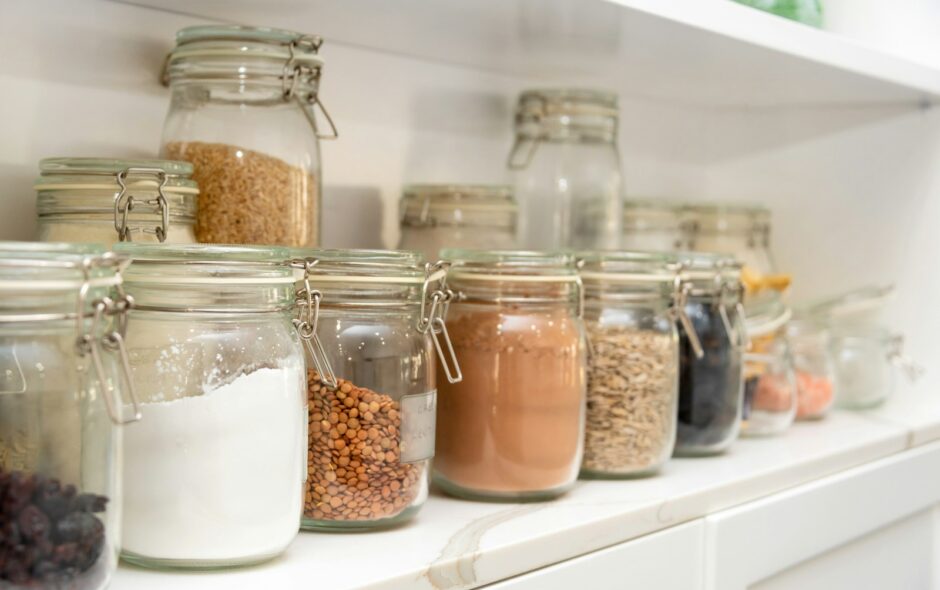
This is where most of the two weeks should come from, because it is food your family eats and rotates anyway. Canned meats and fish, canned beans, pasta and rice, peanut butter, crackers, shelf-stable milk, oatmeal, dried fruit, nuts, granola bars, canned fruit and vegetables, jarred sauces, and the coffee and tea that keep morale intact. Buy one extra of each on every normal shopping trip from May onward and the shelf fills itself. Rotate by eating the oldest first.
Pantry food needs a way to cook. A two-burner propane stove is the right tool for a household, because it boils a full pot and makes a real meal at the same time, and it runs on the one-pound cylinders that store for years. Our Coleman Triton two-burner review covers the household option; the bottletop single burner is the compact backup. Figure roughly one 16-ounce cylinder per day of cooking two meals for a family, and read our propane cylinder review for storage. Operate fuel-burning camp stoves outdoors according to their instructions, never inside a home or garage.
Tier 3: long-shelf-life food as the backstop
Freeze-dried and dehydrated meal kits exist for the days after the pantry runs thin, and for the scenario where you had no time to shop. They weigh little, need only hot water, and store for a very long time when kept cool. Our reviews of the Mountain House bucket and the ReadyWise 60-serving bucket cover taste and real calorie counts. For the days when there is no stove at all, dense ration bars such as the 3,600-calorie bars need no water and no heat and ride in the car as well as the pantry.
For specific products in each tier, see our roundup of emergency food bars and rations and our reviews of the ReadyWise 7-Day Grab Bag, the ReadyWise 132-serving bucket and Simple Kitchen powdered eggs.
The Water the Food Needs
Here is the part the buckets never mention on the front. Freeze-dried and dehydrated meals need water to become food, usually about a cup per serving, and that water is on top of the gallon per person per day that agencies recommend for drinking and basic hygiene. A family of four eating three rehydrated meals a day is adding roughly a gallon or more to its daily water use. Pasta and rice need water too, and most of it is poured off.
Plan the water alongside the food. Our guide to how much water to store for a hurricane works through the numbers, and the water filter roundup covers making more when the stored supply runs low. The practical shortcut is to weight the pantry toward food that needs little or no water (canned goods are already in liquid) and to save the freeze-dried meals for when you have a confirmed water supply.
Storage: Heat Is the Enemy
Manufacturers quote shelf lives of up to 25 years for freeze-dried kits. Read the fine print and that figure assumes storage at around 55 to 70 degrees, dry, out of light, and with the seals intact. The same can stored in a Florida garage that hits 110 degrees every afternoon will lose quality in a fraction of that time. Heat is the variable that matters most, and it is the one most Gulf Coast households get wrong by putting the buckets in the garage or a shed.
- Store inside the air-conditioned envelope. A closet floor, under a bed, the bottom of a pantry. Not the garage, not the attic, not the laundry room next to the dryer.
- Keep it dark and dry. Light degrades packaging and fats. Cans and pouches on a shelf in a closed closet last longer than the same food on an open garage rack.
- Date everything. A marker and the purchase date on every can, bucket and box. Pantry food rotates on a first-in, first-out basis; the long-shelf-life backstop gets checked once a year for bulging cans, torn pouches and pest damage.
- Treat “best by” as a quality date, not a safety switch. Commercially canned food in a sound can is generally safe well past the printed date; it slowly loses texture and nutrition. Dented, bulging, rusted or leaking cans go in the trash regardless of date.
Our guide to how long freeze-dried food lasts covers shelf life by brand and storage conditions in more detail.
Cooking and Eating Without Power
A plan that only works with a working kitchen is not a plan. Decide now how you will boil water and heat food with the power out: a propane camp stove or a charcoal or gas grill, outdoors in the open air. Carbon monoxide from any of these indoors is a leading cause of post-storm deaths, so the rule is simple and absolute: no combustion inside, including the garage with the door open.
Keep a manual can opener in the kit (two is better), disposable plates and utensils to save water on washing, heavy-duty trash bags, dish soap, and a cooler with ice if you can get it in the days before landfall. If you own a battery power station, a small electric kettle or induction plate running off it is the cleanest way to boil water indoors; our power outage checklist covers sizing one.
Special Diets, Kids and Pets
Buckets assume everyone eats pasta with powdered sauce. Infants need formula and the water to mix it (sealed, ready-to-feed formula removes the water problem). People with diabetes, celiac disease or allergies need their own supply, because an emergency shelter or a neighbor’s pantry will not have it. Picky children will not eat unfamiliar food on day three of an outage just because they are hungry, so the pantry tier should be built around meals they already like. Pets need two weeks of their own food and the water to go with it, and a few cans of wet food cover a pet that stops drinking in the heat.
Finally, think about morale food. Coffee, tea, hot chocolate, candy, a jar of something indulgent. Two weeks of recovery work in the heat is miserable, and a small comfort at the end of the day is worth the shelf space. If you want to go further than two weeks, our heirloom seed kit review covers the long-horizon end of food planning, though seeds are a years-long project, not a storm response.
The Shopping List, Summarized
| Tier | Buy | Needs | Covers |
|---|---|---|---|
| Refrigerator and freezer | Nothing extra; a thermometer and a cooler | A way to cook outdoors | Days 1 to 2 |
| Pantry | Canned protein, beans, pasta, rice, peanut butter, crackers, shelf-stable milk, oats, dried fruit, nuts, bars, canned fruit and vegetables, coffee and tea | Two-burner stove, propane cylinders, manual can opener, water | Days 2 to 10 |
| Long-shelf-life backstop | One or more freeze-dried meal kits sized by total calories; ration bars | Hot water for the kits; nothing for the bars | Days 8 to 14 and beyond |
Common Questions
Is two weeks really necessary on the Gulf Coast?
After a Category 3 or stronger landfall, power restoration in the hardest-hit counties has repeatedly taken two to three weeks, and grocery supply chains lag the power. Three days covers a near miss. Two weeks covers the storm that actually hits you.
Can I just buy one big freeze-dried bucket and be done?
Total calories are one check; also confirm dietary suitability, preparation requirements and enough no-cook food for times when cooking is unavailable. Most households are better served by a deeper pantry of food they already eat, with a bucket or two as the backstop, because pantry food is cheaper per calorie, needs less water, and gets rotated naturally.
How do I keep food cold with no power?
Keep the refrigerator and freezer closed, move the most perishable items into a cooler with ice bought before the storm, and eat in order of spoilage. A battery power station can run a refrigerator for a day or two; a generator can run it indefinitely with fuel. Both are covered in the power outage checklist linked above.
Bottom Line
A two-week food supply is a calorie target, not a bucket count. Work out your household’s number, eat the refrigerator first, build the bulk of the supply from a deeper version of the pantry you already keep, and hold a freeze-dried kit and some ration bars as the backstop. Store all of it inside the air-conditioned part of the house, plan the water and the stove alongside the food, and rotate it by eating it. Do that and the week after landfall is an inconvenience instead of a crisis.
If you want a long-shelf-life backstop that still gives you a hot meal when cooking is not possible, the Heaven’s Harvest Self-Heating Meal Kit we review heats with water instead of a stove; its 12-pack holds about 5,400 calories by the maker’s label, so count it as a few days of food, not two weeks.
Updated 2026-11-11: the ReadyWise bucket we linked was out of stock, so the closing link now goes to the 4Patriots 1-Week Survival Food Kit.
Updated 2026-11-17: removed the covered-porch option for a camp stove; cooking with fuel is outdoors in the open air only.
Updated 2026-11-18: the 4Patriots kit was out of stock on Amazon, so the closing link now goes to the Heaven’s Harvest Self-Heating Meal Kit, which we review.
Some links on this page are Amazon affiliate links. If you buy through them, Ultimate Prepper’s Guide may earn a small commission at no extra cost to you.